
Pheasant Hunting Tips: Wild Birds, Dogs and Preserves
Where2Hunt staff · Updated Oct 29, 2026
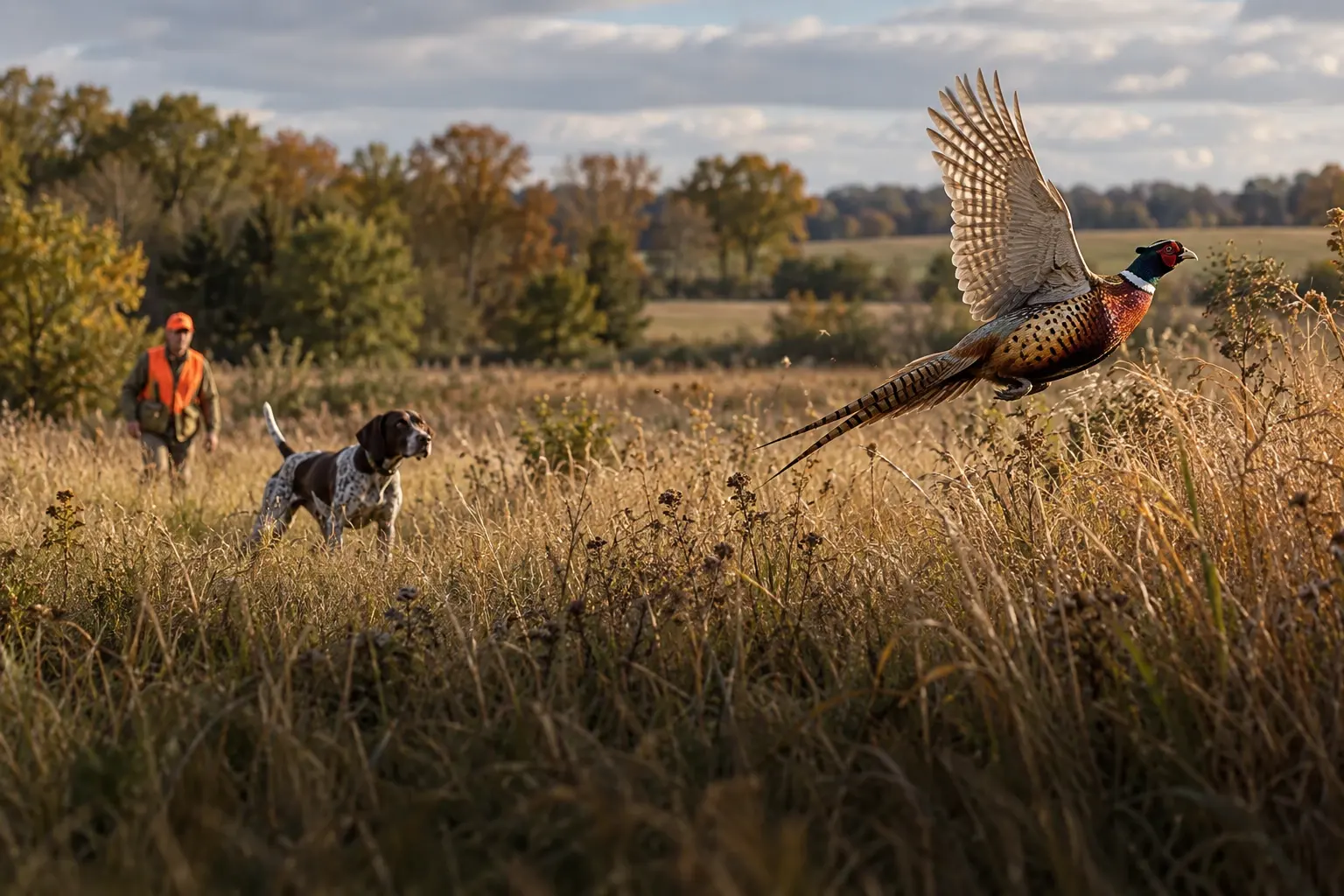
Pheasant hunting tips for wild and preserve birds: cover types, hunting with or without a dog, group safety and blockers, shot selection and walk-in lands.
The most useful pheasant hunting tips are to hunt the thickest cover near food, work it slowly and thoroughly, use a good dog if you can, and keep a disciplined group so everyone shoots safely. Wild roosters are wary runners that would rather sneak away than fly, while preserve birds hold tighter and give new hunters plenty of practice. Either way, cover, patience and safe gun handling decide the day.
Wild pheasants vs preserve birds
Ring-necked pheasants were introduced to North America and are now established across the northern Plains, the Midwest and parts of the West. Wild birds live where grassland, cropland and dense winter cover come together. Hunting them takes miles of walking and a lot of persistence, and the reward is a bird that has survived predators, weather and other hunters.
In most states, wild pheasant seasons are open for roosters only, and hens are protected to support next year's population. Season dates, daily limits and shooting hours vary by state, so check current rules through our state hunting regulations and agencies directory.
Preserves release pen-raised birds on licensed private land, often with longer seasons and fewer restrictions on sex or limits for released birds. They are a good place to train a dog, introduce a new hunter or get a lot of shooting in a day. If you are new to the concept, read what a hunting preserve is and our guide to wild, released and high-fence hunting.
Where pheasants hide: cover types
Pheasants follow a daily routine. They leave the roost in the morning to feed in crop fields or weedy edges, loaf in nearby cover during midday, feed again in the afternoon and return to heavy grass or cattails to roost. Knowing that pattern tells you where to look.
- Grasslands and CRP fields. Tall native and planted grasses provide nesting, loafing and roosting cover. They are a staple of pheasant hunting.
- Crop field edges. Picked corn, milo and soybean stubble attract birds to feed, especially next to good cover.
- Fencerows, ditches and shelterbelts. Narrow strips of cover connect larger blocks and are easy for small groups to hunt.
- Cattail sloughs and thick wetlands. Late in the season and in cold, snowy weather, birds pack into the heaviest cover available.
- Weedy draws and odd corners. Small, overlooked patches near food often hold birds that the crowds walk past.
Early in the season, birds are spread out and less wary. As pressure builds, they move to thicker and more remote cover, so adjust where you hunt.
Working with a dog
A good dog finds more birds, flushes them within range and recovers wounded birds that would otherwise be lost in heavy cover. Pheasant hunters use both pointing breeds and flushing breeds.
- Pointing dogs lock up on scent and hold until the hunter walks in. Wild roosters often run from a point, so the dog must relocate and pin the bird again.
- Flushing dogs, such as Labradors and springer spaniels, work close and push birds into the air. Keep a flushing dog within gun range, because a dog that ranges too far will flush birds out of range.
Let the dog work into the wind when you can. Hunt slowly and give the dog time in thick spots. Carry water for the dog, watch for heat stress on warm early-season days, and check feet and coat for burrs and cuts. Never shoot at a low bird, because you cannot always see where the dog is.
Pheasant hunting without a dog
You can kill pheasants without a dog, but you have to change how you hunt.
- Hunt smaller, defined cover like fencerows, ditches and narrow strips where birds cannot slip away easily.
- Walk in a stop-and-go pattern. Pause frequently. A stopped hunter makes a nervous rooster think it has been seen, and it often flushes.
- Zigzag through thick spots and kick out brush piles and clumps of grass.
- Push to the end of the cover. Birds tend to run ahead and flush where the cover runs out, so be ready at field corners and the far ends of strips.
- Mark downed birds carefully. Walk straight to the spot without taking your eyes off it. Without a dog, a wounded rooster can run and hide.
Late in the season, snow helps dogless hunters by concentrating birds and showing tracks.
Group safety and blocking
Group drives are common on pheasants, and they require clear rules. Before anyone loads a gun, the group should agree on the plan.
- Wear blaze orange, including a hat, so everyone can see each other in tall cover. Some states require it for upland hunting, so check the rules.
- Keep the line straight. Walkers should stay even with each other and talk often so no one falls behind or gets ahead.
- Shoot only in your zone. Take birds in front of you or going away. Never swing through the line, and never shoot toward another hunter, a blocker or a dog.
- Blockers stand at the end of the field to stop running birds. Walkers must know exactly where the blockers are and stop shooting as they get close. Blockers should only take birds that are high and safe, or not shoot at all.
- Treat every gun as loaded. Keep the safety on until you mount the gun to shoot, open actions when crossing fences or ditches, and unload before getting into a vehicle.
- No low shots. A rooster that flushes low may have a dog or person behind it.
Shot selection and making clean kills
Roosters are tough birds with thick feathers. Most hunters use a 12 or 20 gauge with an improved cylinder or modified choke and lead or nontoxic loads where required. Nontoxic shot is mandatory on some public lands, so check the area rules.
Wait for the bird to clear the cover and get to a reasonable distance before shooting. Shooting a rooster too close ruins the meat, and shooting too far wounds birds. Focus on the head and the front of the bird, not the long tail. Identify the bird as a rooster before you shoot on wild-bird hunts: look for the bright colors, the white neck ring and listen for the cackle.
Walk-in lands and preserves
Many Plains and Midwestern states run walk-in access programs that open private land to public hunting, and wildlife management areas also hold birds. Start with public hunting land by state, and watch for program-specific rules such as foot-traffic only or seasonal dates.
If you want a guaranteed opportunity, a dog-and-guide package or a place to train, look at licensed hunting preserves and ranches on Where2Hunt. You can also learn more about the species on our pheasant species page.
Frequently asked questions
What is the best time of day to hunt pheasants?
Mid to late morning, after birds leave the roost to feed, and the last couple of hours before sunset are usually productive. Legal shooting hours vary by state, and some states do not open pheasant hunting until mid-morning.
Can you hunt pheasants without a dog?
Yes. Hunt narrow, defined cover, walk in a stop-and-go pattern and push to the ends of strips where birds flush. A partner or two posted as blockers also helps.
What choke and gauge are best for pheasants?
Many hunters use a 12 or 20 gauge with improved cylinder for close early flushes and modified for longer shots later in the season. Pattern your gun with the loads you plan to hunt with.
Can you shoot hen pheasants?
On wild-bird hunts, most states allow roosters only. Licensed preserves often allow hens because the birds are released, but rules vary, so ask the preserve and check your state's regulations.
General information, not legal advice. Hunting laws vary by state and change every year; confirm with the state wildlife agency. See an error? Tell us.