
Duck Hunting for Beginners: Licenses, Decoys and Blinds
Where2Hunt staff · Updated Oct 29, 2026
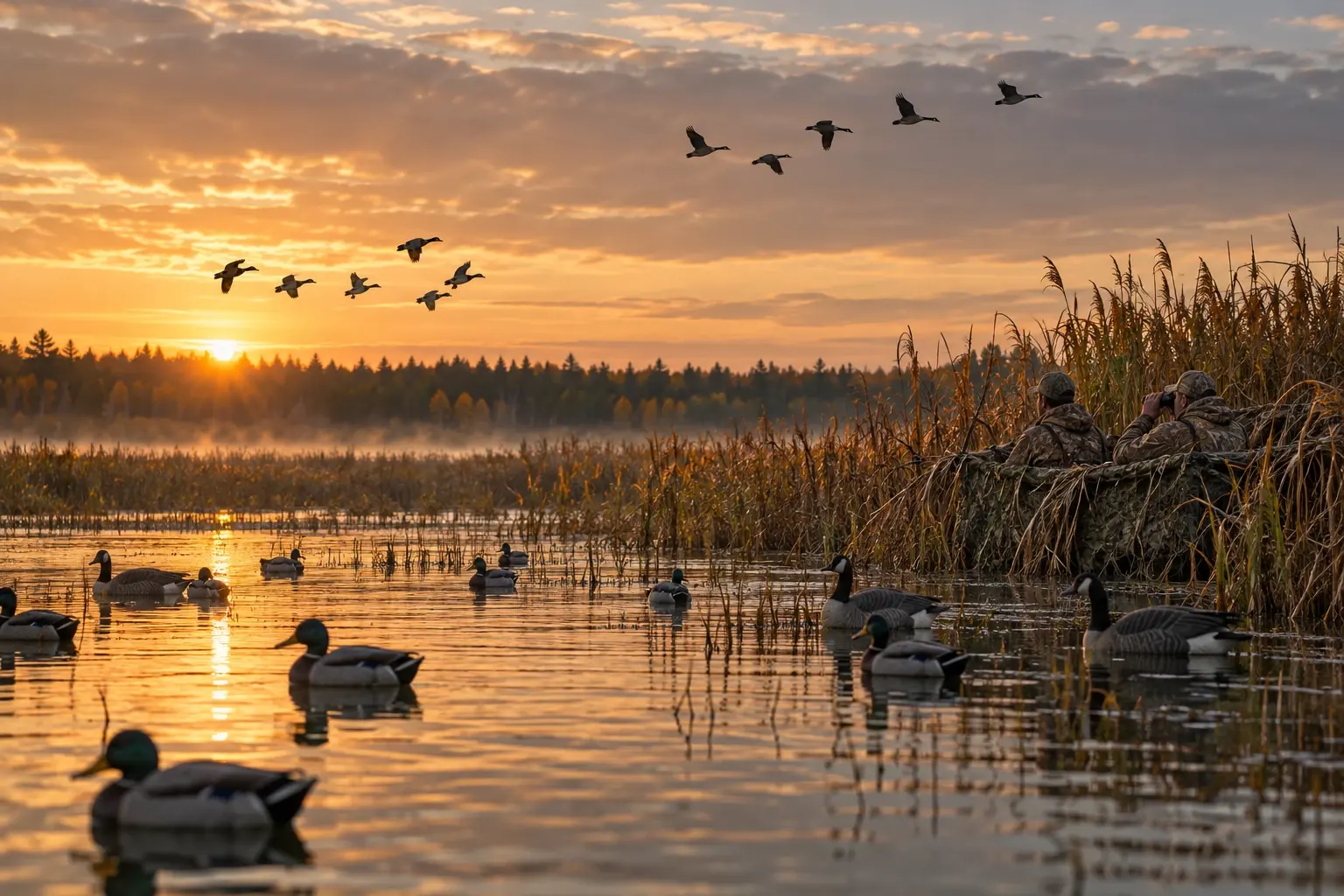
Duck hunting for beginners: licenses, HIP and the federal duck stamp, nontoxic shot, decoy spreads, calling, blinds, bird ID and why a guided hunt helps.
Duck hunting for beginners starts with paperwork and gear that other kinds of hunting do not require: a state license, HIP registration, a federal duck stamp if you are 16 or older, and nontoxic shot. Once that is sorted, success comes from finding where ducks want to be, hiding well, setting a realistic decoy spread, and identifying birds before you shoot. A guided hunt or an experienced partner is the fastest way to learn.
Licenses, HIP and the federal duck stamp
Ducks are migratory birds, so they are managed under both federal and state rules. Before you hunt, you will generally need:
- A state hunting license for the state you are hunting, plus any state waterfowl stamp or permit that state requires.
- HIP registration. The Harvest Information Program is a national survey of migratory bird hunters. You register through each state you hunt, usually when you buy your license, and answer a few questions about last season's harvest.
- A federal duck stamp. Waterfowl hunters 16 and older must carry a current Federal Migratory Bird Hunting and Conservation Stamp, signed across the face. Proceeds go toward buying and protecting wetland habitat.
- Hunter education, if your state requires it for your age.
Seasons, shooting hours, daily bag limits and species restrictions are set each year within federal frameworks, then finalized by each state. They differ by state and often by zone within a state, and limits can be different for individual species. Read the federal migratory bird hunting regulations and your state's waterfowl digest every season, and use our list of state hunting regulations and agencies to find the right agency.
Shotguns, nontoxic shot and other federal rules
Federal law requires nontoxic shot for waterfowl hunting everywhere in the United States. Steel is the most common and affordable option. Bismuth and tungsten-based loads cost more but carry energy farther and may be safer in older shotguns that are not rated for steel. Check your gun manufacturer's guidance before shooting steel through an older barrel or tight choke. You may not even have lead shot in your possession while hunting waterfowl in most situations, so leave your upland shells at home.
Your shotgun must be plugged so it holds no more than three shells total. Most pump and semiautomatic shotguns come with a plug or can be fitted with one.
Federal rules also prohibit hunting waterfowl over bait. Baiting rules can get technical, especially around agricultural fields and food plots, so if you hunt private land with crops or plantings, learn the rules before the season. Our post on how to attract ducks to your land covers habitat management in general terms.
Learn to identify ducks
Bird identification is a core skill because limits are often set by species and sex, and some species may be closed or restricted in a given year. Start with the common ducks in your area: mallards, wood ducks, teal, gadwall, wigeon, pintails and the diving ducks such as scaup, redheads and canvasbacks.
Learn them by silhouette, flight pattern, wing beat and sound, not just by plumage. In low light, color is hard to see. Ducks Unlimited and many state agencies publish free ID guides, and watching ducks at a local refuge in the off-season is good practice. The rule is simple: if you cannot identify the bird, do not shoot. You can find more on our waterfowl species page.
Decoys and spreads
Decoys tell passing ducks that a spot is safe and has food. You do not need hundreds to start.
- Small water and timber. A dozen or so decoys can be plenty on a small pond, creek or flooded timber hole, where ducks are coming in close.
- Big water. Open lakes and large marshes usually call for larger spreads so birds can see them from a distance.
- Leave a landing hole. Ducks land into the wind. Set your spread with an open pocket upwind of your blind so birds fall into it in front of you, inside good shooting range.
- Add motion. A jerk string, a spinning-wing decoy where legal, or a few decoys on a moving line make a spread look alive on calm days.
Match your decoys to the species using the area. Keep them clean and rigged with enough line and weight for the water depth.
Calling ducks
Calling helps, but bad calling hurts more than no calling. Learn the basic hen mallard quack, the greeting call and the feed chuckle, and practice before the season. A whistle for teal, wigeon and pintails is easy to learn and works well.
Watch the birds, not the call. If ducks are working your spread and turning toward you, ease off. Call more at birds heading away or passing wide, and less when they are committed and setting their wings.
Blinds, concealment and safety
Ducks spot hunters by movement, shine and outlines that do not match the cover. Hide in natural vegetation or a blind brushed in with material from the area. Wear camouflage that matches the cover, cover your face and hands, and keep still until it is time to shoot.
Common setups include layout blinds in fields, boat blinds, permanent or portable marsh blinds, and simply standing against a tree in flooded timber.
Waterfowl hunting has its own risks, especially cold water. Follow these basics:
- Wear a life jacket in any boat and when wading deep or fast water. Cold water can incapacitate a person quickly.
- Do not overload the boat, and secure guns, dogs and gear before running in the dark.
- Agree on shooting zones in the blind. Never swing across another hunter, and stand or shoot only on a call such as "take 'em."
- Treat every gun as loaded, keep actions open when moving or getting in and out of a boat or blind, and know where your dog is at all times.
- Tell someone where you are going and when you plan to be back.
Guided hunts and where to find ducks
A guided duck hunt is one of the best ways in. The outfitter handles the blind, decoys, calling and often the dog, and you get to watch how an experienced crew reads birds and weather. Browse guided waterfowl hunts and outfitters on Where2Hunt to see options by state.
If you want to go on your own, many state wildlife areas and federal refuges offer waterfowl hunting, sometimes through daily drawings or reservation systems. Look up public hunting land by state, scout in the days before you hunt, and go where the birds are actually using the water.
Frequently asked questions
Do you need a duck stamp to hunt ducks?
Yes, if you are 16 or older you need a current federal duck stamp, signed across the face, in addition to your state license and HIP registration. Some states also require their own waterfowl stamp.
What shot do you need for duck hunting?
You must use nontoxic shot for all waterfowl hunting in the United States. Steel is the most common choice, while bismuth and tungsten loads are alternatives that may suit older guns or longer shots.
How many decoys do you need for duck hunting?
It depends on the water. A dozen or so can work on small ponds and timber, while big open water usually needs more. Placement, a clear landing hole and good concealment matter more than the number.
Is a guided duck hunt worth it for a beginner?
For most beginners, yes. A guide supplies the blind, decoys, calling and local knowledge, and you learn how a duck hunt actually works before buying your own gear.
General information, not legal advice. Hunting laws vary by state and change every year; confirm with the state wildlife agency. See an error? Tell us.