How to Plan an Elk Hunt: What First-Timers Need to Know
Where2Hunt staff · Updated Oct 29, 2026
How to plan an elk hunt: draws vs over-the-counter tags, DIY, guided or drop camp, fitness, gear, glassing, calling, shot distance, altitude and meat care.
To plan an elk hunt, start a year or more ahead: pick a state and unit, learn its tag system, decide between a DIY, guided or drop camp hunt, then spend the months before the season getting in shape and practicing with your weapon and gear. Elk live in big, steep country, so planning for access, altitude and meat care matters as much as finding the animals. A realistic plan is the difference between a hard trip and a miserable one.
Draws, over-the-counter tags and choosing a state
Elk tags are issued in two general ways. Many western states allocate some or all tags through a draw, an application process with a deadline that often falls months before the season. Some states use preference or bonus points that improve your odds over time if you apply year after year. Other states or units offer over-the-counter tags that anyone can buy without a draw, though they often come with more hunting pressure.
The details vary widely. Application deadlines, point systems, nonresident quotas, license costs, legal weapons and season structures differ from state to state and change from year to year. Start with each state's official wildlife agency through our state hunting regulations and agencies directory, and read the current big game regulations and draw statistics before you apply.
When comparing states and units, look at:
- Elk numbers and how they are trending
- How much public land the unit has and how accessible it is
- Hunter density and success data published by the agency
- Season options (archery, muzzleloader, rifle) and timing
- Terrain and elevation, and how they match your fitness
Our elk species page and the federal PAD-US public land map are helpful starting points for understanding where elk and public ground overlap.
DIY vs guided vs drop camp
There are three common ways to hunt elk, and each fits a different budget, skill level and comfort with risk.
- DIY hunt. You plan everything, from the unit to the camp to getting meat out. It costs the least in fees and teaches you the most, but success rates for first-time DIY hunters are often modest. Plan to spend your first trip learning the country.
- Guided hunt. An outfitter provides local knowledge, camp, meals, often horses or mules, and help with field care and packing. It is the most expensive option and usually the best chance at an elk for someone new. Read questions to ask before booking a guided hunt and browse guided hunts and outfitters on Where2Hunt.
- Drop camp. An outfitter packs you and your gear into a remote camp on horseback, then leaves you to hunt on your own and returns on a set date (and often when you have an elk down). It gets you into country that is hard to reach on foot without the cost of a full guide.
Whichever you choose, if you are traveling, work through an out-of-state hunting trip checklist for licensing, firearm transport and carcass rules.
Fitness and altitude
Elk hunting is physically demanding. You may hike miles a day over steep ground, often at elevations much higher than you live at, then carry heavy loads out. Start training months before the season.
- Hike with weight. Walk hills or stairs with a loaded pack, building up over time.
- Build leg and core strength. Squats, lunges and step-ups help on steep sidehills.
- Do cardio. Running, cycling or rucking improves your recovery at altitude.
Altitude sickness can affect anyone, regardless of fitness. Symptoms include headache, nausea, fatigue and trouble sleeping. If you can, arrive a day or two early to acclimate, drink plenty of water, and take it easy the first day. If symptoms get worse, descend and get medical help. Talk to your doctor before the trip if you have health concerns.
Elk hunting gear
Good gear keeps you safe and lets you hunt hard for days. Key items include:
- Broken-in boots with good ankle support
- Layered clothing for cold mornings, warm afternoons and wet weather, plus blaze orange where required
- A quality pack frame that can haul meat
- Binoculars and, for open country, a spotting scope and tripod
- Navigation tools: GPS or phone app with offline maps, plus a paper map and compass
- A first aid kit, headlamp, water filter, fire starter and emergency shelter
- Knives, game bags, rope and gloves for field care
- A satellite messenger or other way to call for help where there is no cell service
Practice with your rifle or bow from field positions such as sitting, kneeling and shooting off your pack, at the distances you expect to shoot.
Glassing and calling elk
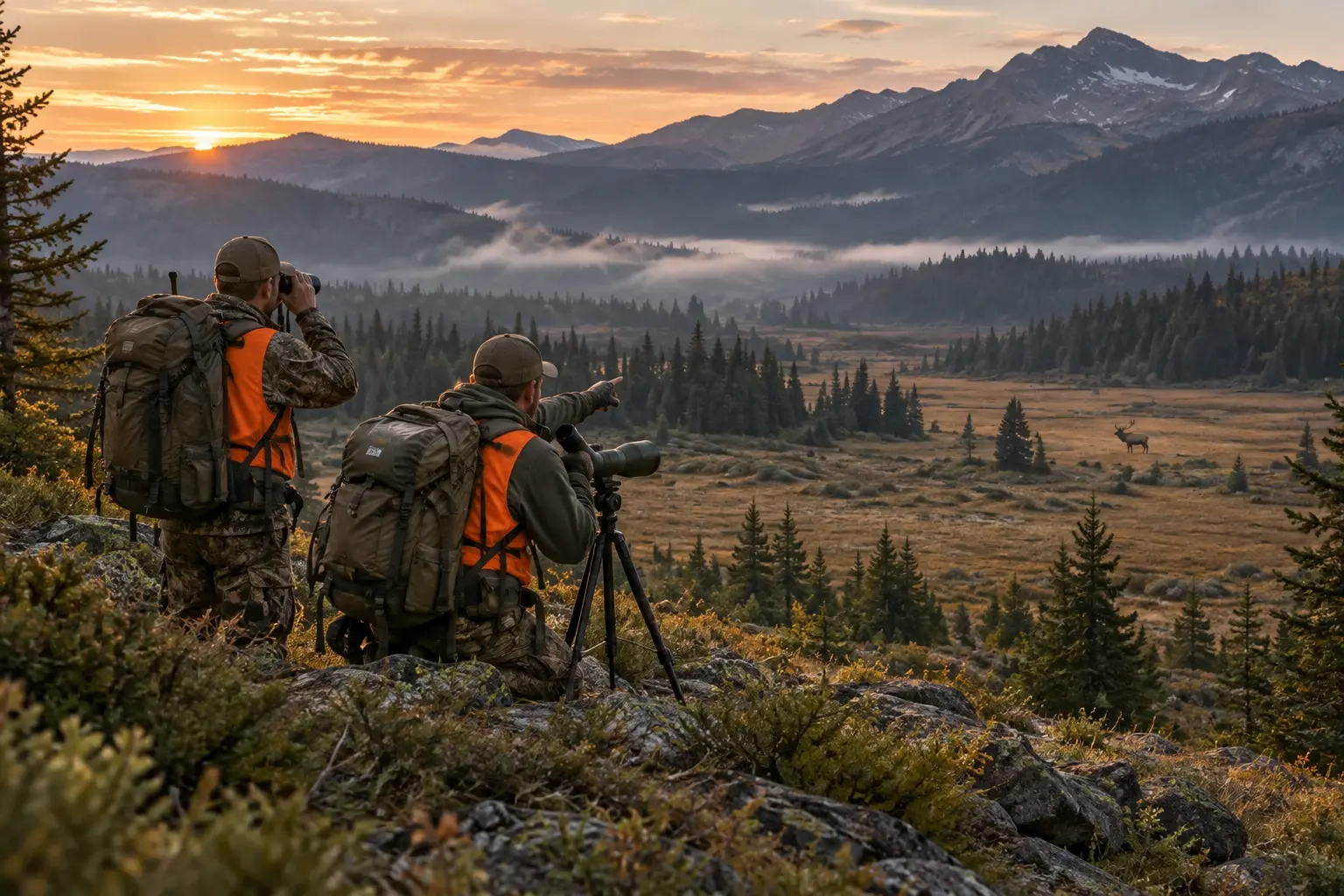
In open and mixed country, glassing is how you find elk. Get to a high vantage point early and late in the day, sit down, stabilize your binoculars and work the openings, timber edges and shaded slopes slowly. Elk are often bedded in dark timber during the middle of the day.
Calling can be very effective, especially in early archery seasons when bulls are bugling. Cow and calf mews help locate elk and calm bulls coming in. Bugles can locate bulls or challenge them. Use calls with a purpose, keep the wind in your favor, and set up so an approaching bull has to come into the open to find the call. A caller set up behind the shooter can help pull a bull past.
Wind is everything. Elk have an excellent sense of smell, and mountain winds swirl and change with temperature. Check the wind constantly and be ready to move.
Shot distance and shot placement
Elk are large, tough animals. Aim for the heart and lungs, low and just behind the front shoulder, on a broadside or slightly quartering-away elk. Use a cartridge or bow setup that is legal and appropriate for elk, and take shots only within the range you have practiced and can make reliably in field conditions, including wind and steep angles. Be certain the animal is legal under your tag before you shoot.
After the shot, mark the spot, watch the elk as long as you can and give it time. Then follow up carefully.
Packing out elk meat
Getting the meat out is the real work. A mature elk produces a lot of meat, and moving it out of steep country can take several trips, a pack team or help from friends. Plan this before you hunt.
- Cool it fast. Quarter the elk or use a gutless method, hang quarters in game bags in the shade, and get meat away from the carcass so it can cool.
- Know the rules. Many states have wanton waste rules on which meat must be packed out, and some require evidence of sex to remain attached. Check the regulations before the hunt.
- Have a plan for processing. Line up a processor near your hunting area or a cooler plan for the drive home. Our directory of processors, taxidermists and lodging can help.
- Be bear aware in grizzly country. Hang meat away from camp, approach kill sites carefully and carry bear spray.
Frequently asked questions
How far in advance should you plan an elk hunt?
Plan at least a year ahead if you want to apply for draw tags, since many application deadlines fall months before the season. Even for an over-the-counter hunt, give yourself several months for scouting, fitness training and gear.
Is a guided elk hunt worth it for a first-timer?
For many first-time elk hunters, yes. A guide provides local knowledge, camp and help with field care and packing, which shortens the learning curve. A DIY hunt costs less and teaches more, but expect a lower chance of success on your first trip.
What is a drop camp elk hunt?
An outfitter packs you and your gear into a remote camp, leaves you to hunt on your own, and returns at a set time to pack you and any meat out. It is a middle ground between DIY and fully guided hunts.
How do you prepare for altitude on an elk hunt?
Get in good cardiovascular shape, arrive a day or two early to acclimate if you can, drink plenty of water and ease into the first day. If you develop symptoms that get worse, go to lower elevation and seek medical care.
General information, not legal advice. Hunting laws vary by state and change every year; confirm with the state wildlife agency. See an error? Tell us.