Out of State Hunting Trip Checklist: Plan Before You Go
Where2Hunt staff · Updated Oct 29, 2026
Planning an out of state hunting trip? Use this checklist for licenses, firearm transport, CWD carcass rules, lodging, processors and meat care on the road.
A successful out of state hunting trip comes down to three things: the right licenses and tags for a nonresident, a legal plan for moving firearms and game across state lines, and a place to stay and process meat near where you hunt. Sort those out before you leave and the hunt itself gets much simpler.
This checklist follows the order most hunters plan in, from picking a destination to bringing meat home. Rules differ by state and change often, so use it as a framework and confirm each item with the agencies involved.
Research the destination and the hunt
Start with where and what you will hunt. A nonresident hunt usually means less time to scout, so the more you learn from home, the better.
- Pick the state, the unit or county and the species. Compare seasons across states before you commit.
- Decide on the type of access: public land, a lease or day access, a preserve, or a guided hunt with an outfitter.
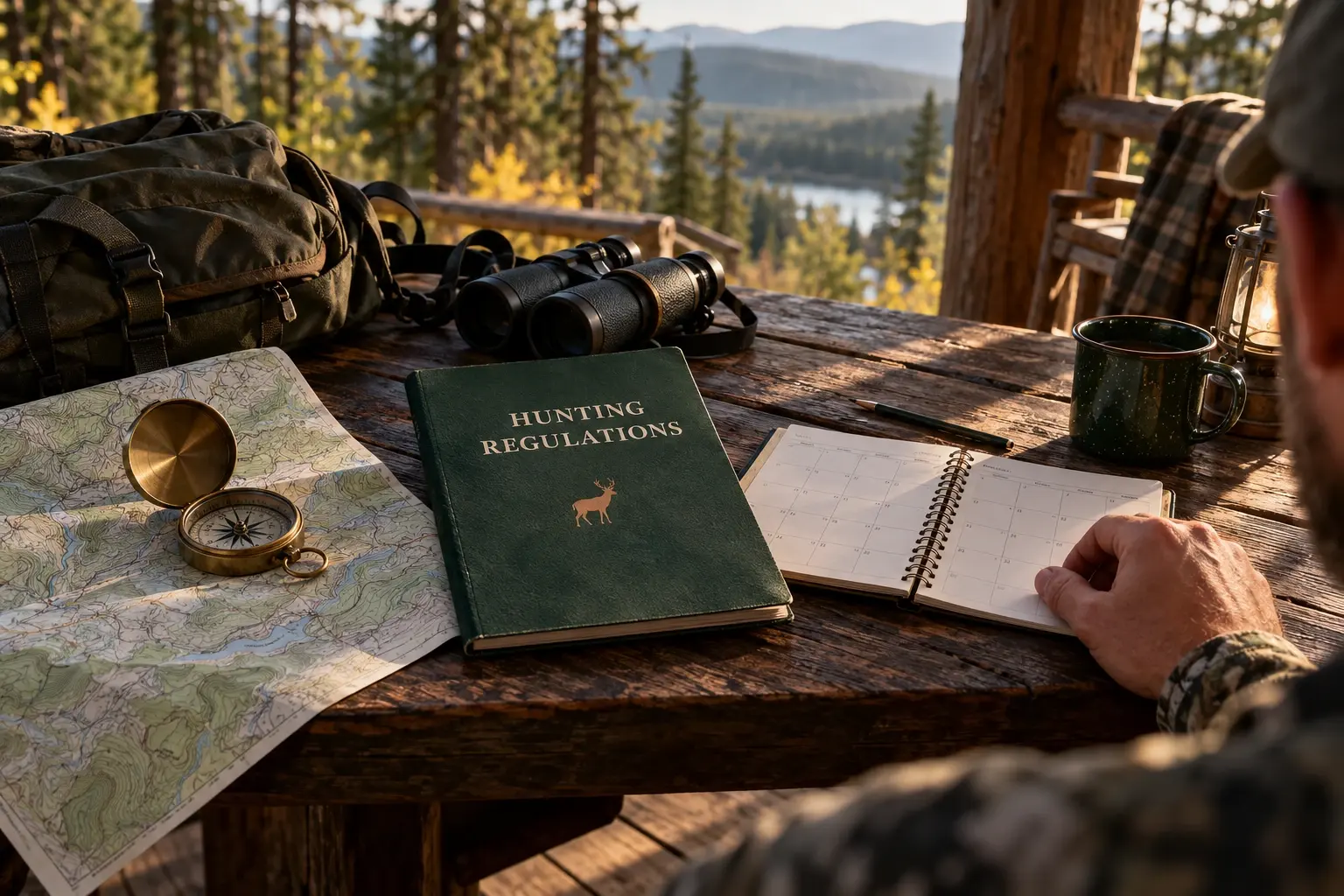
- Read the state's regulations cover to cover for your species, including legal hours, weapon rules, hunter orange requirements and any special rules for the area you will hunt.
- Study maps and aerial imagery. Mark parking areas, access points, property lines and backup spots.
- Call the regional wildlife office. Biologists and wardens can often tell you about recent conditions, access changes and rules that are easy to miss.
If you want someone else to handle the land and the logistics, browse guided hunts, outfitters and lodges and ask plenty of questions about what is included before you book.
Licenses, tags and draw deadlines
Nonresident licensing is where many out of state trips go wrong. Work through these items early:
- Check whether the hunt requires a draw or whether tags are sold over the counter. Draw applications can close many months ahead of the season.
- Confirm your hunter education card is accepted in the destination state, and keep the certificate number handy.
- List every piece you need: base license, species tags, permits, stamps, and for migratory birds, HIP registration and a federal duck stamp if you are 16 or older and hunting waterfowl.
- Buy directly from the state agency or its authorized agents. The U.S. Fish and Wildlife Service lists where to buy a hunting license in each state.
- Save digital copies and carry paper backups where allowed.
Our hunting license guide explains tags, stamps, preference points and residency in more detail.
Transporting firearms and bows legally
Firearm transport laws vary by state, county and city, and the strictest place on your route is the one that matters. Check the law in your home state, your destination and every state you drive through, and look up the rules for any city where you plan to stop overnight. When in doubt, contact the state police or attorney general's office for each state.
General practices that keep you on the conservative side:
- Transport firearms unloaded, in a locked case, and stored where they cannot be reached from the passenger compartment when possible, such as a locked trunk or a locked container in a truck bed.
- Store ammunition separately, also locked.
- Keep firearms in the vehicle as little as possible during stops, and never leave them visible in an unattended vehicle.
- Bring documentation such as your license, permits and any proof of ownership or purchase you have.
- If you are flying, read the airline's firearm policy and the TSA rules for checked firearms before you book. In general, firearms must be declared at the ticket counter, unloaded and locked in a hard-sided case in checked baggage. Ammunition has its own packing limits.
Bows and crossbows face fewer restrictions in most places, but some states and cities still regulate how they can be carried, and broadheads should be covered or stored in a closed quiver. This is general guidance, not legal advice. If your route is complicated, talk to an attorney familiar with firearm law.
CWD carcass transport rules
Chronic wasting disease (CWD) is a fatal disease of deer, elk, moose and related species, and many states restrict moving whole carcasses or certain parts across state lines to slow its spread. These rules can apply to the state you hunt in, your home state, and states you pass through.
Many states with carcass rules allow hunters to bring in some combination of:
- Deboned meat, cut and wrapped or frozen
- Quarters or other parts with no spinal column or brain tissue attached
- Hides and capes with no head attached
- Skull plates or antlers cleaned of all brain and soft tissue
- Finished taxidermy and cleaned teeth
That list is a pattern, not a rule. Some states are stricter, some include specific counties or zones, and the definitions change. Read the CWD section of the regulations for every state involved, and plan to bone out meat or use a processor near the hunt if whole carcasses are not allowed home. Many states also require or offer CWD testing in certain areas, so find out where and how to submit a sample before you go. Find each agency on our state hunting regulations page.
Lodging, processors and taxidermists
Lining up services before the trip saves time when it matters most, right after a harvest.
- Book lodging close to where you hunt. During popular seasons, rooms in small towns fill fast. Ask whether the place allows hunters to hang or store game and whether there is freezer space.
- Find a meat processor near your hunting area and call ahead. Ask about hours during the season, whether they ship or hold meat, how they handle out of state hunters and whether they follow CWD rules for the area.
- If you want a mount, talk to a taxidermist before the trip about caping, how to handle the hide, and whether to use one at home or near the hunt.
- Locate the nearest emergency room, a hardware store and a place to buy ice.
Our directory of processors, taxidermists and lodging is a good place to start, and the Where2Hunt trip planner can help you pull the details together in one place.
Meat care on the road
Getting meat home in good shape is the last part of a successful trip. Heat, time and moisture are the problems.
- Cool the animal fast. Field dress promptly, open the body cavity and get the carcass out of the sun. See our guide on how to field dress a deer.
- Bring more cooler space than you think you need, and plenty of ice. Good coolers hold ice much longer when pre-chilled.
- Keep meat dry. Put ice in sealed bags or use frozen water jugs so meltwater does not soak the meat. Drain coolers often.
- Bone out meat if a whole carcass will not cool well or will not be legal to transport.
- Keep tags, harvest reports and any transport documentation with the meat until it is processed.
Final packing list for an out of state hunt
The night before you leave, run through these items:
- Licenses, tags, stamps and hunter education card
- Printed maps, landowner permissions and outfitter contact details
- Firearm or bow, locked case, separate ammunition, and transport documents
- Field dressing kit, game bags, coolers and ice plan
- Weather-appropriate layers, blaze orange and boots that are broken in
- First aid kit, headlamp, phone charger and a written trip plan left with someone at home
Then add the species-specific gear your hunt calls for, from calls and decoys to game bags and a frame pack.
Frequently asked questions
Can I bring a deer home from another state?
Usually yes, but many states limit what parts can cross state lines because of chronic wasting disease. Deboned meat, cleaned skull plates and capes without the head are commonly allowed, while whole carcasses often are not. Check the rules in the state where you hunt, your home state and any state you drive through.
How do I transport a gun to an out of state hunt?
Travel with the firearm unloaded, locked in a case, with ammunition stored separately and out of reach of the passenger area when possible. Laws differ by state and city, so check every jurisdiction on your route. If you fly, follow the airline's policy and TSA rules for declaring checked firearms.
Do I need a nonresident hunting license for every state I hunt?
Yes. Each state issues its own licenses, and a resident license in your home state does not cover hunting elsewhere. You will usually need that state's nonresident license plus any required tags, permits or stamps.
How far ahead should I plan an out of state hunting trip?
For draw hunts, start the season before, since application deadlines can come many months early. For over-the-counter hunts, a few months is often enough to buy licenses, book lodging and line up a processor. Popular weekends fill quickly, so earlier is better.
General information, not legal advice. Hunting laws vary by state and change every year; confirm with the state wildlife agency. See an error? Tell us.