
Where to Put a Deer Stand: Wind, Access and Cover
Where2Hunt staff · Updated Oct 29, 2026
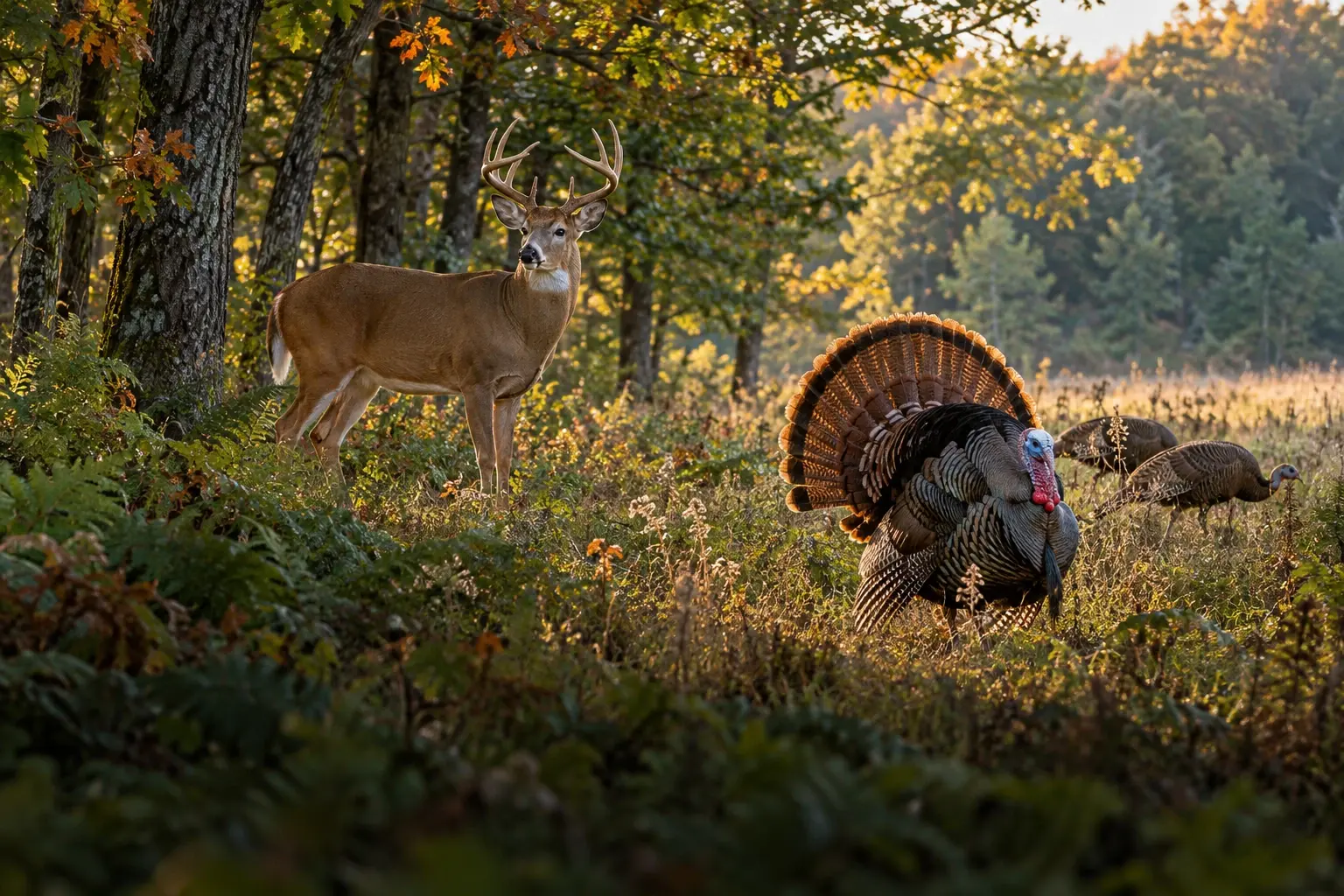
Where to put a deer stand: play the wind and thermals, plan quiet access, hunt travel routes and pinch points, and pick the right stand for each spot.
The best place to put a deer stand is downwind of a spot where deer travel in daylight, with an entry and exit route that keeps you from being seen, heard or smelled. In practice that usually means a travel corridor between bedding and food, a pinch point that funnels movement, or the edge of a food source, with enough cover behind you to break up your outline. Wind and access matter more than the stand itself.
Start with wind and thermals
A deer's nose is its best defense. If your scent drifts toward where deer are coming from, you will rarely see a mature buck from that stand. Every stand location should start with the question, "Which winds can I hunt this in?"
Set stands so the prevailing wind carries your scent away from where you expect deer to approach. A stand on the east side of a trail, for example, works on a west wind only if deer are not likely to come from the east. Carry a wind checker (a puff bottle or a piece of thread on your bow) and check it often, because wind near the ground often swirls differently from the forecast.
Thermals matter just as much, especially in hilly country. As the air warms in the morning, it tends to rise and carry scent uphill. As it cools in the evening, it tends to sink and carry scent downhill. A ridgetop stand might work well on a morning sit and poorly in the evening, or the reverse for a creek bottom. Pay attention to how air moves at different times of day on your property.
Plan entry and exit routes first
The best stand in the woods is useless if you spook deer on the way in or out. Before hanging a stand, walk the route you will use and ask:
- Can I reach this stand without crossing bedding areas or food sources?
- Will my scent blow into areas where deer are likely to be when I walk in?
- Can I use a creek, ditch, ridge, field edge or thick cover to hide my movement?
- Can I get out after dark without walking through deer feeding in a field?
Evening stands on the edge of a food plot or field can be hard to leave without bumping deer that are already feeding. Some hunters arrange for a partner to drive up to the field after dark, which often moves deer off more gently than a person walking out. Morning stands near bedding cover need especially careful approaches, because you are walking in while deer are heading back to bed.
Hunt the travel between bedding and food
Deer spend most of the day bedded in cover and move to food in the evening and back to bedding in the morning. The routes they take between the two are some of the most reliable places to hang a stand.
For evening hunts, set up along trails leading from bedding toward food, or in staging areas just inside the timber where deer often pause before stepping into an open field in daylight. Mature bucks often linger in these spots until it is nearly dark.
For morning hunts, set up closer to bedding cover so you catch deer returning from feeding areas. Get in well before first light, and keep your approach quiet.
Trail cameras help confirm which routes deer use in daylight. Our post on trail camera tips for deer covers how to read those patterns before you commit to a stand site. If you have food plots, our guide to food plots for deer explains how to shape plots so a stand on the downwind edge sees deer in range.
Pinch points, funnels and terrain features
Deer take the easiest, safest path through the landscape, and terrain naturally squeezes their movement into predictable spots. Look for:
- Inside corners of fields, where the woods jut into the opening.
- Saddles, the low spots on a ridge where deer cross from one side to the other.
- Creek crossings, especially shallow spots with firm banks.
- Fence gaps and places where fences are down.
- Narrow strips of cover connecting larger blocks of timber or bedding areas.
- Benches, the flat shelves on hillsides that deer use as travel routes.
- Edges where two habitat types meet, such as timber and a clear-cut.
These funnels are especially valuable during the rut, when bucks cover a lot of ground looking for does. Our guide to understanding the whitetail rut covers how buck movement changes across each phase.
Stand height, cover and shooting lanes
There is no perfect stand height. Higher stands can help keep your scent above deer and your movement out of their line of sight, but they also make shot angles steeper and can leave you silhouetted against the sky. Many hunters find a middle ground that keeps them comfortable and safe.
Cover often matters more than height. A tree with several trunks, thick limbs or nearby evergreens behind you breaks up your outline. A lone tree with nothing around it leaves you exposed even when you are high.
Shooting lanes should be trimmed well before the season, when the disturbance will have time to fade. Trim the minimum you need for clear shots, and leave cover around the stand itself. On leased or public land, get permission before cutting anything, and check the rules; some public lands prohibit cutting vegetation or using screw-in steps.
Any time you climb, follow good safety practice: wear a full-body harness, stay connected from the ground to the stand with a lifeline, keep three points of contact while climbing, and use a haul line to raise your unloaded firearm or bow. Our tree stand safety guide covers these steps in detail.
Ladder stands, hang-ons and ground blinds
Each type of stand suits different situations.
Ladder stands are stable, comfortable and good for new hunters or long sits. They are heavy, take more than one person to set up safely, and are hard to move once placed. They work best on spots you will hunt year after year.
Hang-on stands with climbing sticks are lighter and more flexible. You can move them as the season changes or hang them in trees that a ladder cannot fit. Setting them up takes more skill and more time at height, so practice in daylight and always stay connected with a harness and lifeline.
Ground blinds are useful where there are no good trees, for hunting with kids, or in bad weather. Deer can be wary of a new blind, so many hunters set blinds out well before the season and brush them in with local vegetation. Pop-up blinds can be moved easily, which helps when hunting a new spot.
On public hunting land, many states and land managers limit when stands can be left overnight and require them to be labeled. Check the rules before you hang anything.
Set up multiple stands for different winds
One stand only works in the winds that suit it. Having several stands lets you hunt more often without educating deer. Many hunters name stands by the winds they work in, such as "north wind stand" or "east wind stand," so they can choose quickly on any given day.
Do not overhunt any single stand. Deer notice repeated intrusion quickly, and your first sit in a fresh stand is often the best. Rotating among stands and resting the best ones for the right conditions keeps them productive through the season. Where2Hunt's land and lease listings often describe existing stand locations, which can help you see how a property was hunted before.
Frequently asked questions
How far should a deer stand be from a food plot?
Close enough that deer feeding along the near edge are within your comfortable shooting range, and placed on the downwind side for your hunting wind. Many hunters set stands just inside the timber or in a staging area off the plot, so they catch deer moving in before dark. Make sure you can get out without walking through feeding deer.
What direction should a deer stand face?
Face the stand toward where you expect deer to come from, with the wind blowing your scent away from that direction. Consider the sun too, since staring into a sunrise or sunset makes it hard to see. Cover behind you matters more than the exact compass direction.
How high should a tree stand be?
There is no single right height. Higher stands help keep scent and movement away from deer, but they create steeper shot angles and greater fall risk. Choose a height you are comfortable with, and always wear a full-body harness connected to a lifeline from the ground up.
Should you hunt the same stand every day?
Usually not. Repeated sits leave scent and disturbance, and deer adjust quickly. Having several stands for different winds lets you rest each one and hunt it only when conditions are right.
General information, not legal advice. Hunting laws vary by state and change every year; confirm with the state wildlife agency. See an error? Tell us.