
Best Food Plot for Deer: Choosing Crops That Work
Where2Hunt staff · Updated Oct 29, 2026
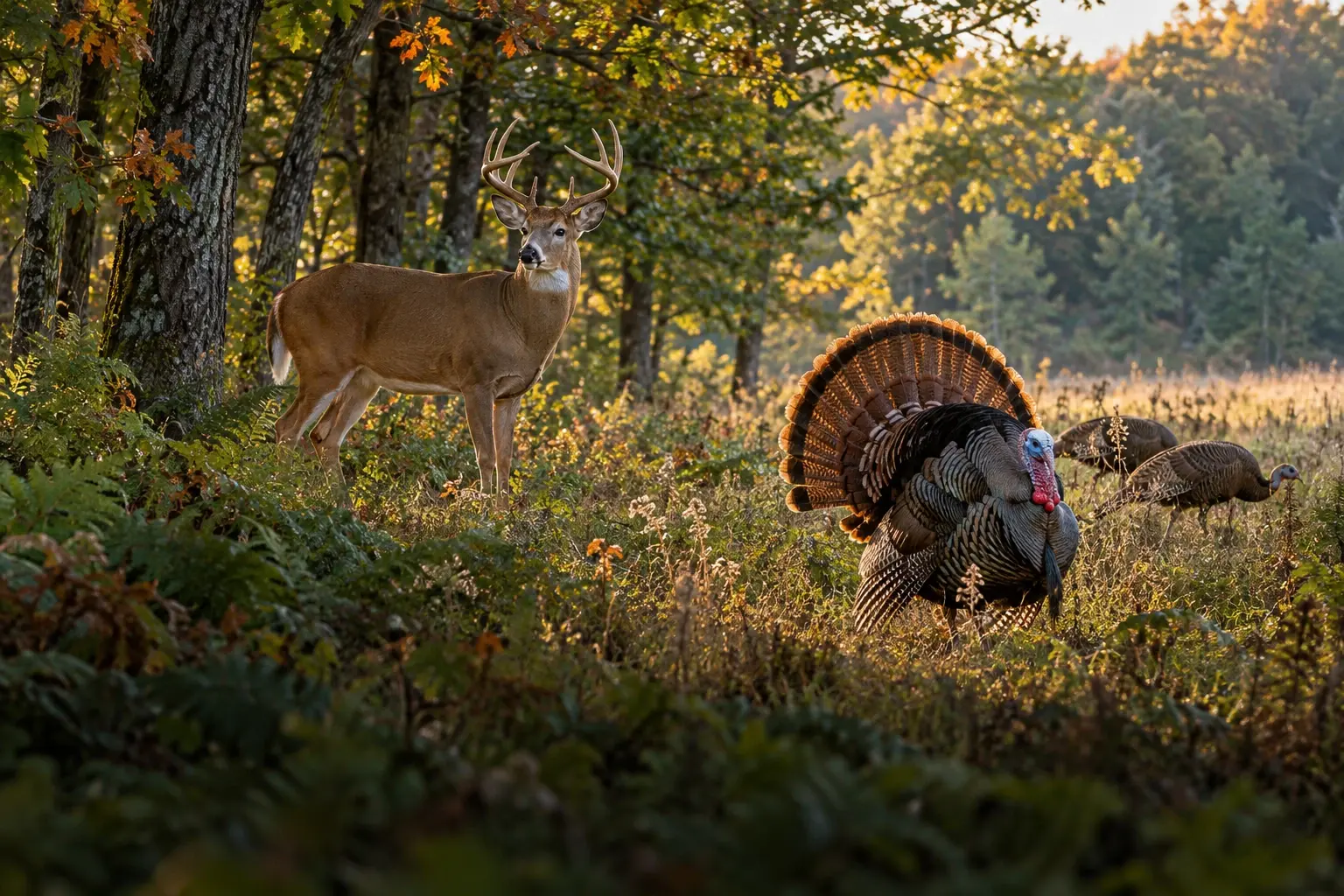
The best food plot for deer depends on your soil, region and plot size. Compare clover, brassicas, cereal grains, soybeans, peas, corn and blends.
The best food plot for deer is the one that fits your soil, your region, your plot size and the time of year you want deer using it. For many landowners that means a perennial like clover for most of the year, paired with a cool-season mix of cereal grains and brassicas for hunting season. Larger properties with good equipment can add soybeans, peas or corn for summer nutrition and late-season energy.
What makes the best food plot for deer
No single crop wins everywhere. Before you pick seed, answer a few questions:
- When do you want deer using the plot? Summer forage, early bow season, the rut and late season each favor different crops.
- How big is the plot? Small plots get browsed hard. Crops that regrow after grazing hold up better than crops that die once eaten.
- What do your soil and rainfall allow? A soil test tells you what pH and fertility you are working with. Sandy, droughty ground and heavy, wet ground suit different plants.
- What equipment do you have? Some crops germinate fine when broadcast onto a prepared seedbed. Others do much better drilled at the right depth.
- What surrounds you? If neighbors grow corn and soybeans, deer may ignore the same crops on your land in summer and focus on something different in fall.
If you are new to planting, start with our guide to food plots for deer, which covers site selection, soil testing and seedbed work. The crop is the last decision, not the first.
Clover and other perennials
Clover is the backbone of many food plot programs. It is a perennial legume, so a well-kept stand can last several years. It fixes much of its own nitrogen, tolerates regular grazing, and provides protein during the growing season. White clovers in particular handle browsing and mowing well. Turkeys use clover plots heavily too, which makes them a good fit if you also hunt spring turkeys.
Clover does best with the pH corrected and with ongoing care. Mowing a few times during the growing season keeps it tender and knocks back broadleaf weeds before they go to seed. Grass competition is the most common problem, and grass-selective herbicides labeled for clover can help. Read and follow the label every time.
Other perennials often mixed with clover include:
- Chicory, a deep-rooted broadleaf that handles dry spells better than many clovers.
- Alfalfa, which is very productive but wants well-drained soil, a higher pH and more management than clover.
Perennials are a long-term investment. They take time to establish and may not look like much in the first season, but once they are going you are mostly maintaining rather than replanting.
Brassicas: turnips, radishes and rape
Brassicas are cool-season annuals planted in late summer or early fall. The group includes turnips, radishes, rape and kale-type forages. They grow fast, produce a lot of leafy tonnage, and many varieties become more appealing to deer after a few hard frosts, when the plants convert starches to sugars. Turnip and radish roots add a food source late in the season after the tops are eaten.
Brassicas are a strong choice in areas with cold winters, where a late-season food source matters most. They need good fertility, especially nitrogen, and they do not like being planted in the same ground year after year, which can build up pests and disease. Rotating brassica plots with cereal grains or clover is a common approach.
One thing to know: deer in some areas take time to start using brassicas, especially early in the fall. A plot that seems ignored in October may get hammered once the weather turns cold.
Cereal grains: oats, wheat and cereal rye
Cereal grains are the most forgiving cool-season crop for beginners. They germinate quickly, tolerate a wide range of soils, and are attractive to deer from early fall onward.
- Oats are very palatable and grow fast, but they are less cold tolerant and may die off in hard northern winters.
- Wheat is a reliable, widely available option that stays green through much of the winter in many areas.
- Cereal rye is extremely cold hardy, grows in poorer soils than most crops, and keeps producing forage late into the season and again in early spring.
Cereal rye (the grain) is not the same plant as annual ryegrass. Many food plot growers avoid ryegrass because it can be hard to get rid of later. Make sure the bag says what you think it says.
Cereal grains also work well as a nurse crop. Planting clover with oats, wheat or rye in the fall gives deer something to eat right away while the clover establishes underneath.
Soybeans, peas and corn
These warm-season crops can be excellent, but they come with trade-offs.
Soybeans produce high-protein forage in summer and, if the plants survive browsing, grain that deer eat in fall and winter. The problem is that deer love young soybeans, and small plots often get eaten to the stem before they ever mature. Soybeans usually make the most sense on larger plots, in areas with lower deer density, or behind temporary electric fencing while they establish.
Peas, such as cowpeas and forage peas, are another summer or early-fall legume that deer find very attractive. Like soybeans, they can be browsed out quickly on small plots.
Corn provides high-energy grain in late season and standing cover that deer like to move through. It needs large plots, good fertility, weed control and real equipment to plant well. On small acreage, corn is often eaten or knocked down before it pays off, and it does nothing for deer until the ears mature.
Blends and matching crops to plot size and region
Commercial blends mix several species so that something in the bag will grow and be eaten across a range of conditions. They can be a smart choice when you are not sure what your site will support. The trade-off is that each species in a blend may want different planting depths and fertility, so read the planting instructions closely.
Some simple combinations that many hunters rely on:
- Small hunting plots: clover with a cereal grain, or a cereal grain and brassica mix. These tolerate browsing and draw deer in hunting season.
- Mid-size plots: a perennial clover plot paired with a separate fall annual plot, so you always have something green.
- Large feeding plots: soybeans or corn for summer and late-season food, with cereal grains or brassicas planted in rotation.
Region matters, too. In the North and Midwest, cold tolerance is key, so brassicas, cereal rye and standing grain are popular late-season foods. In the South, cool-season plots are usually planted later in the fall, and summer heat and drought make warm-season plots harder to keep alive. Sandy soils in the Southeast and dry ground in the Plains need crops that handle moisture stress. Your county extension office and local seed dealers know which varieties hold up in your area better than any national ad.
If you are evaluating hunting land for sale by state, notice the soils and the crops on surrounding farms. They tell you a lot about what will grow and what deer already have available. On Where2Hunt you can compare properties across regions before you visit.
Food plots are one part of the picture. Cover, bedding and low hunting pressure matter just as much, and our guide on how to improve hunting land covers the habitat work that makes plots pay off. For more on deer behavior and seasons, see the whitetail species guide.
Frequently asked questions
What is the easiest food plot to grow for deer?
Cereal grains such as oats, wheat or cereal rye are generally the easiest. They germinate quickly, tolerate a range of soils, and can be broadcast onto a prepared seedbed or even a sprayed and mowed spot. Adding clover with them is a simple way to build a perennial plot over time.
What do deer prefer, clover or brassicas?
It depends on the season and the area. Deer often favor clover and grains in early fall, then shift to brassicas after hard frosts make them sweeter. Many hunters plant both so deer have something attractive at every stage of the season.
What should I plant in a small food plot?
Small plots do best with crops that handle heavy browsing, such as clover, cereal grains, or a grain and brassica mix. Soybeans, peas and corn usually get eaten before they mature on small plots unless deer numbers are low or you fence the plot while it establishes.
Is cereal rye the same as ryegrass?
No. Cereal rye is a cold-hardy grain that is widely used in deer plots. Annual ryegrass is a different plant that many food plot growers avoid because it can be difficult to control later. Check the seed tag before you buy.
General information, not legal advice. Hunting laws vary by state and change every year; confirm with the state wildlife agency. See an error? Tell us.