
Food Plots for Deer: A Beginner's Guide to Planting
Where2Hunt staff · Updated Oct 29, 2026
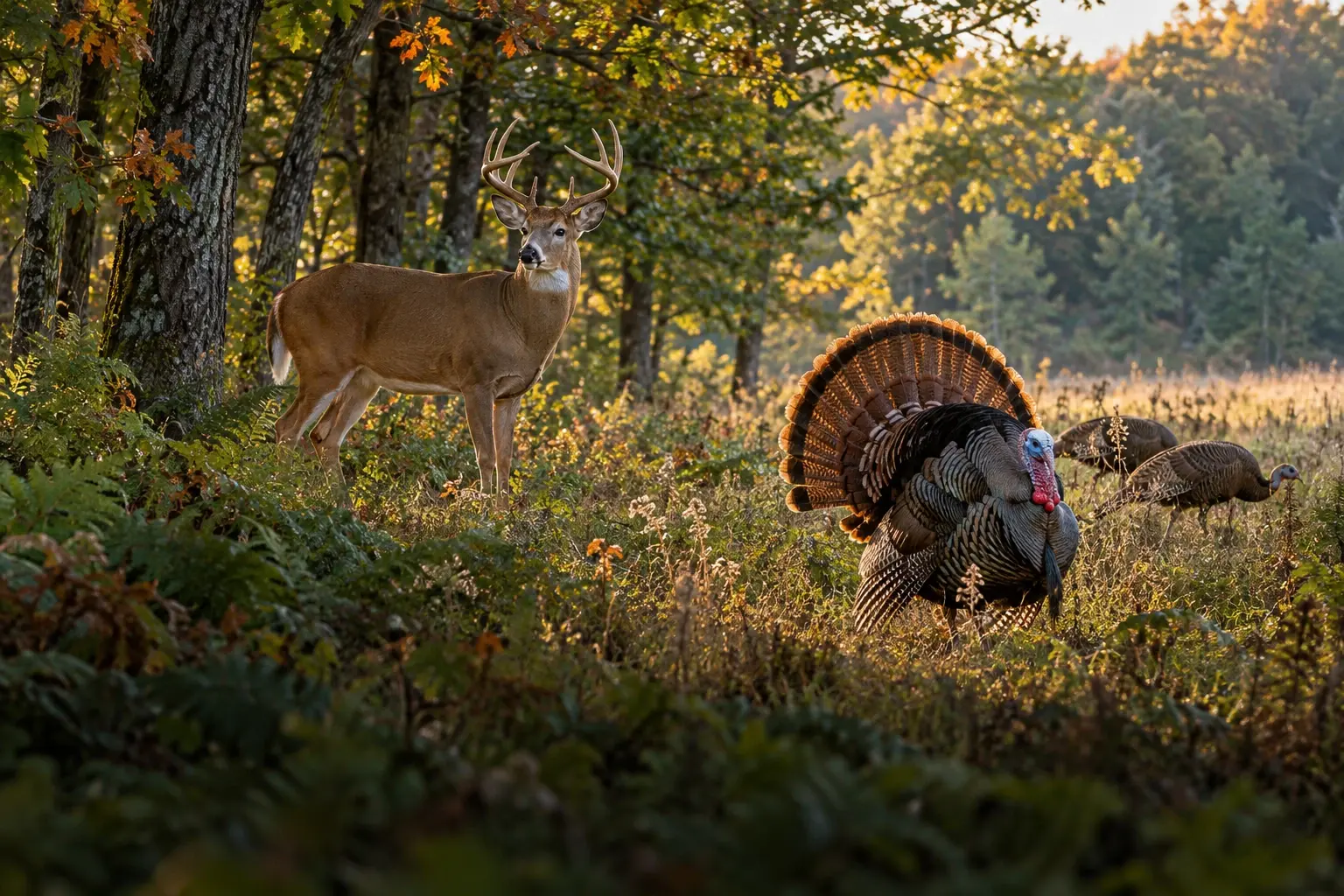
A beginner's guide to food plots for deer: picking a site, testing soil, choosing equipment, building a seedbed and timing your plots by season.
Food plots for deer are small planted fields that give deer a dependable source of forage and give you a predictable place to see them. A good plot starts with the right site, a soil test and lime, a clean seedbed, and a crop planted at the right time for your region. Most beginners get better results from one or two well-placed plots than from a lot of acreage planted in a hurry.
Why food plots for deer work, and where they fall short
Deer eat a wide mix of foods through the year: browse from woody plants, broadleaf weeds, acorns and other mast, and farm crops where they can get them. A food plot concentrates high-quality forage in one spot. That helps during the stress periods when natural food runs thin, usually late summer and late winter, and it can give deer a reason to spend more daylight time on your ground.
A plot is not a substitute for habitat, though. Deer need thick cover to bed in and security from pressure. A lush plot surrounded by open hardwoods with no understory will mostly get visited at night. Think of plots as one tool inside a bigger plan for the property, not the whole plan.
If you are still browsing hunting land for sale on Where2Hunt, it pays to look at a property with plots in mind. Existing openings, decent soils, and a way to get equipment in all make plot work far easier than clearing timber from scratch.
Choosing a food plot site
Site selection matters more than seed choice. An average crop in the right spot will beat a great blend in the wrong one. Look for these traits:
- Sunlight. Forage crops need plenty of direct sun through the day. Narrow openings under a full hardwood canopy struggle no matter what you plant.
- Soil and drainage. Avoid spots that hold standing water for long stretches, as well as deep sand or solid rock. Bottomland edges and old fields are often good starts.
- Access for you and your equipment. You need to get a tractor, ATV or at least a spreader in, and you need to be able to hunt the plot without walking through the deer.
- Nearby cover. Plots close to bedding areas see more daylight use. A plot in the middle of a big open field feels exposed to a mature deer.
- Existing openings. Old log landings, skid trails, overgrown fields and the edges of farm ground save a lot of work. Clearing new ground means stumps, roots and years of soil building.
Start with a soil test and lime
A soil test is the cheapest insurance you can buy for a food plot. Your county extension office can usually point you to a lab. Take small samples from several spots across the plot, mix them in a clean bucket, and send in the blend along with the crop you plan to plant.
The results show soil pH and nutrient levels, plus how much lime and fertilizer to apply. Most forage crops grow best when the soil is close to neutral, and many wooded and hill soils run acidic. When pH is off, plants cannot use the nutrients already there.
Lime works slowly, so spread it as early as you can, ideally months ahead of planting. Pelletized lime is easier to handle in small plots without a spreader truck. Apply fertilizer at planting based on the test. Legumes like clover and soybeans make much of their own nitrogen, so they need less of it than grains and brassicas. Skipping the soil test is one of the most common reasons first-year plots fail.
Equipment options, from hand tools to tractors
You do not need a barn full of machinery to plant a food plot. The right setup depends on plot size, terrain and budget.
Hand tools and no-till methods
For small, remote plots, a backpack sprayer, a hand spreader and a sturdy rake can get the job done. A common approach is "throw and mow": kill the existing vegetation with an herbicide used according to its label, broadcast seed ahead of a good rain, then mow the dead thatch down over the seed so it holds moisture. Cereal grains and some clovers do well this way.
ATV and UTV implements
Small discs, drags, cultipackers, sprayers and spreaders built for ATVs and UTVs cover a lot of ground for a modest investment. They are light, which helps on soft ground, but that same lightness limits how well they break up sod or hard soil.
Tractors and hired help
A compact tractor with a disc, tiller or no-till drill handles larger plots and tougher soil. If you only plant a few acres a year, hiring a local farmer to disc or drill can make more sense than owning the gear. Some soil and water conservation districts and farm cooperatives rent no-till drills, which is worth asking about locally.
Building a seedbed and planting
Whatever equipment you use, the steps are similar:
- Kill or remove existing grass and weeds with herbicide, tillage, or both. Give sprayed vegetation time to die back before working the ground.
- Work the soil to a smooth, firm bed and incorporate lime and fertilizer if you can.
- Broadcast or drill seed at the depth the seed tag recommends. Small seeds like clover and brassicas go in very shallow, often just pressed onto the surface. Larger seeds like peas, soybeans and grains go deeper.
- Firm the soil with a cultipacker or drag so seed makes good contact with the dirt.
- Time planting ahead of rain whenever possible.
Planting into dry, dusty soil is a gamble, so many growers wait for a decent forecast rather than a calendar date.
Timing: spring plots versus fall plots
Most food plot plans split into two seasons. Warm-season plots are planted in spring or early summer and include crops like soybeans, peas, corn and some summer annuals. They feed deer through summer, which helps antler growth and fawn rearing, and some carry into fall.
Cool-season plots are planted in late summer or early fall and include cereal grains, brassicas and clover in many regions. They are what most hunters picture when they think of a hunting plot, because they peak during deer season. The right window varies a lot from north to south. Northern growers plant earlier so crops establish before cold weather, while growers in the South often plant later to avoid heat and drought. Your extension office and the seed tag are the best guides for your area. For crop-by-crop details, see our guide to the best food plot crops for deer.
Plot size, shape, and hunting plots versus feeding plots
It helps to decide what each plot is for before you plant it.
Feeding plots are usually larger and are meant to put nutrition on the landscape for much of the year. They can handle heavy browsing, and many landowners hunt them lightly or not at all so deer use them without pressure.
Hunting plots (often called kill plots) are small, tucked into cover, and shaped to bring deer within range of a stand. Irregular shapes such as an L, an hourglass or a long narrow strip help deer feel secure in daylight and keep them close to the edge you are watching. Put the stand on the side that stays downwind in your most common hunting wind, and plan an approach that does not cross the plot. Our post on where to put a deer stand covers this in more detail.
Small plots can get eaten to the ground before they establish. A simple wire exclusion cage in the plot shows how much the crop would grow without browsing, so you can tell a failing plot from one that is just used hard.
Baiting and feeding laws differ by state, and some states have specific rules about hunting over planted or manipulated crops. Before you hunt a plot, check your state hunting regulations so you know what is allowed where you hunt.
Frequently asked questions
How big should a food plot for deer be?
There is no single right size. Hunting plots are often small and tucked into cover so deer use them in daylight, while feeding plots are larger so they can survive browsing. If deer keep wiping out a small plot, make it bigger, plant a crop that tolerates grazing, or add more plots.
When should I plant a fall food plot?
Fall plots are generally planted in late summer or early fall so they can establish before cold weather, but the window shifts a lot by region. Northern areas plant earlier and southern areas later. Check with your county extension office and follow the seed tag, and try to plant ahead of rain.
Can I plant a food plot without a tractor?
Yes. Small plots can be planted with a sprayer, a hand spreader, a rake and a mower using a throw and mow method. ATV implements are another middle ground. Larger plots and heavy soils are where a tractor or hired equipment really pays off.
Do I need a soil test for a food plot?
You do not strictly need one, but it is the cheapest way to avoid a failed plot. A soil test tells you how much lime and fertilizer to apply, and correcting pH often makes a bigger difference than the seed you choose.
General information, not legal advice. Hunting laws vary by state and change every year; confirm with the state wildlife agency. See an error? Tell us.