
Spring Turkey Hunting Tips: Roosting, Calling and Setups
Where2Hunt staff · Updated Oct 29, 2026
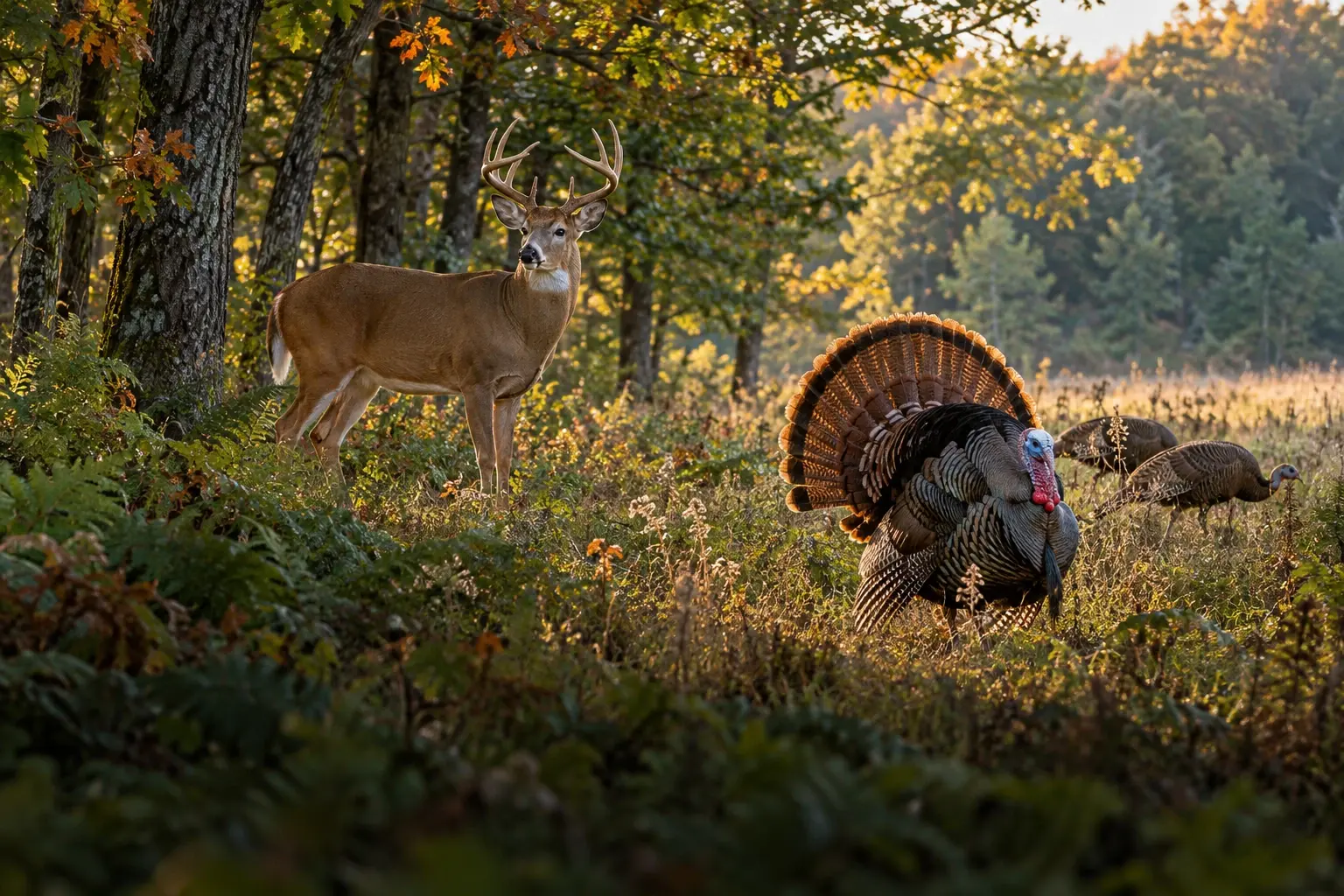
Spring turkey hunting tips on roosting birds, picking a setup, basic yelps, clucks and purrs, decoys, shot placement and staying safe in the turkey woods.
The best spring turkey hunting tips are simple: find where gobblers roost, set up close enough to hear them but not so close you bump them, call sparingly, sit still, and only shoot a bird you have clearly identified within your effective range. Spring hunting works because gobblers are looking for hens, so your job is to sound like a hen in a place he wants to go. The rest is patience and safety.
Know the rules before you hunt turkeys
Spring turkey seasons are set by each state, and the rules differ a lot. Some states allow only bearded birds in spring, some limit hunting hours to the morning, and legal shotguns, shot sizes, bows and decoy use can vary. Tagging and harvest reporting rules also differ. Check the current regulations through our directory of state hunting regulations and agencies, and use the season finder to see when spring seasons open where you want to hunt.
Roosting gobblers the evening before
Turkeys spend the night in trees, usually in mature timber near open ground where they can fly down and feed or strut. Knowing where a gobbler went to roost gives you a huge head start the next morning.
Go out in the last hour of daylight and listen from a ridge, field edge or road where sound carries. Gobblers often gobble on the limb at dusk, sometimes in response to a loud locator call such as an owl hooter or crow call. You can also listen for the wing beats of birds flying up. Mark the spot, note the terrain between you and the bird, and leave quietly once it is dark.
If you cannot roost a bird the evening before, get out well before first light and listen from a high point. Gobblers usually sound off from the roost around daybreak.
Picking a setup
Your setup is more important than your calling. A good setup puts you where a gobbler wants to walk, with nothing in the way that would make him hang up out of range.
- Get close, but not too close. Slip in under cover of darkness to within a reasonable distance of the roost without being seen. In open timber you will need to stay farther back than in rolling or thick terrain.
- Pick ground the bird likes. Gobblers prefer to walk to a hen on open, easy ground. They often will not cross creeks, fences, deep ditches or thick brush to reach a call.
- Sit against a tree wider than your shoulders. It breaks up your outline and protects your back from another hunter.
- Keep a clear view and a clear shot. Face the direction you expect the bird to come from, with your gun already resting on your knee and pointed that way, so you only need small movements to aim.
When a gobbler is coming, freeze. Turkeys have excellent eyesight and pick up movement instantly. Most blown hunts come from moving too soon or too much.
Turkey calling basics: yelps, clucks and purrs
You do not need to be a contest caller to kill a turkey. A few basic sounds, delivered with good timing, will cover most situations.
- Yelp. The most common hen sound, a series of notes that rise and fall. Use soft tree yelps at first light and louder yelps to get a response or call a bird in.
- Cluck. One or a few short, sharp notes. A cluck says "I'm here" and can pull a hesitant gobbler the last few steps.
- Purr. A soft, rolling sound of a content, feeding hen. Purrs and soft clucks sound natural when a bird is close.
- Cutting. Fast, loud, irregular clucks that show excitement. Useful for striking a bird or firing up one that has gone quiet.
Box calls and push-pin calls are the easiest to learn. Slate or pot calls take a little more practice, and mouth (diaphragm) calls take the most but leave your hands free. Learn one call well before adding others.
As for how much to call, read the bird. If he gobbles back every time and is coming closer, call less, not more. If he hangs up, try going quiet, moving a short distance away, or changing calls. A gobbler that hears a hen walking away will sometimes come looking.
Using decoys in spring
Decoys give an approaching gobbler something to look at besides you and can bring him into range in open fields. A single hen or a hen with a jake decoy is a common spread. A jake decoy can draw a dominant gobbler that wants to run off a rival, but it can also intimidate a subordinate bird.
Place decoys inside your effective range so a gobbler focused on them gives you a good shot. Check your state's rules first, since decoy use is restricted in some places. For safety, carry decoys in a bag or vest pocket and never set them up in a way that puts you in the line of fire from someone stalking the decoy.
Shot placement and patterning
With a shotgun, aim at the head and upper neck. That is where a dense pattern of pellets does its work. Wait until the bird is within your effective range and has his head up and neck extended. A gobbler in full strut, with his head tucked into his body, is a poor target. A soft cluck or putt will often make him raise his head.
Pattern your gun before the season with the exact load and choke you will hunt with. Shoot at turkey head targets at several distances so you know where your pattern is dense enough and where it falls apart. That distance is your maximum range, no matter what the box says.
Bowhunters need a different approach. Body shots through the vitals and head shots with specialty broadheads are both used, and a blind helps hide the draw. Practice a lot from a seated position before trying it.
Turkey hunting safety
Most turkey hunting accidents involve one hunter mistaking another for a turkey. Follow these rules every time:
- Never wear red, white, blue or black. Those are the colors of a gobbler's head and body. Check your socks, undershirt and gear as well.
- Positively identify your target. Never shoot at sound, movement or color. See the whole bird and confirm it is legal.
- Do not stalk a gobbling bird. It may be another hunter calling.
- If another hunter approaches, stay still and call out in a loud, clear voice. Do not wave, move or use a turkey call to alert them.
- Wear hunter orange when moving and when carrying a harvested bird out of the woods, and wrap the bird so no part of it is visible.
- Treat every firearm as loaded and be sure of what is beyond your target.
Morning vs afternoon and where to hunt
Early morning is prime time because gobblers are most vocal on and just off the roost. But do not quit too soon. Mid-morning, after hens leave the gobbler to nest, can be the best time to call in a lonely bird. Where afternoon hunting is legal, gobblers often return to strut zones and feeding areas before heading to roost.
Turkeys are found in almost every state, on both public and private ground. Start with public hunting land by state, look for a spring lease or day access, or book with an outfitter through the guided hunts and outfitters directory on Where2Hunt. You can also read more about the bird on our wild turkey species page.
Frequently asked questions
What time should I be in the woods for spring turkey hunting?
Be set up well before first light so you are settled before the birds wake. Getting in early lets you slip close to the roost under darkness and listen for the first gobbles.
How far away should I set up from a roosted turkey?
Close enough to hear him clearly and call him in, but far enough that he cannot see you arrive. That distance depends on terrain and leaf cover, so stay farther back in open timber and closer in rolling or thick ground.
What colors should you not wear turkey hunting?
Never wear red, white, blue or black, since those colors appear on a gobbler's head and body. Wearing them can cause another hunter to mistake you for a turkey.
Is it better to call a lot or a little?
Usually a little. Call enough to get a response and keep a bird interested, then let him come. If a gobbler is answering and closing the distance, more calling can make him stop and wait for the hen to come to him.
General information, not legal advice. Hunting laws vary by state and change every year; confirm with the state wildlife agency. See an error? Tell us.