Hunting Gear Checklist: What to Pack for Every Hunt
Where2Hunt staff · Updated Oct 29, 2026
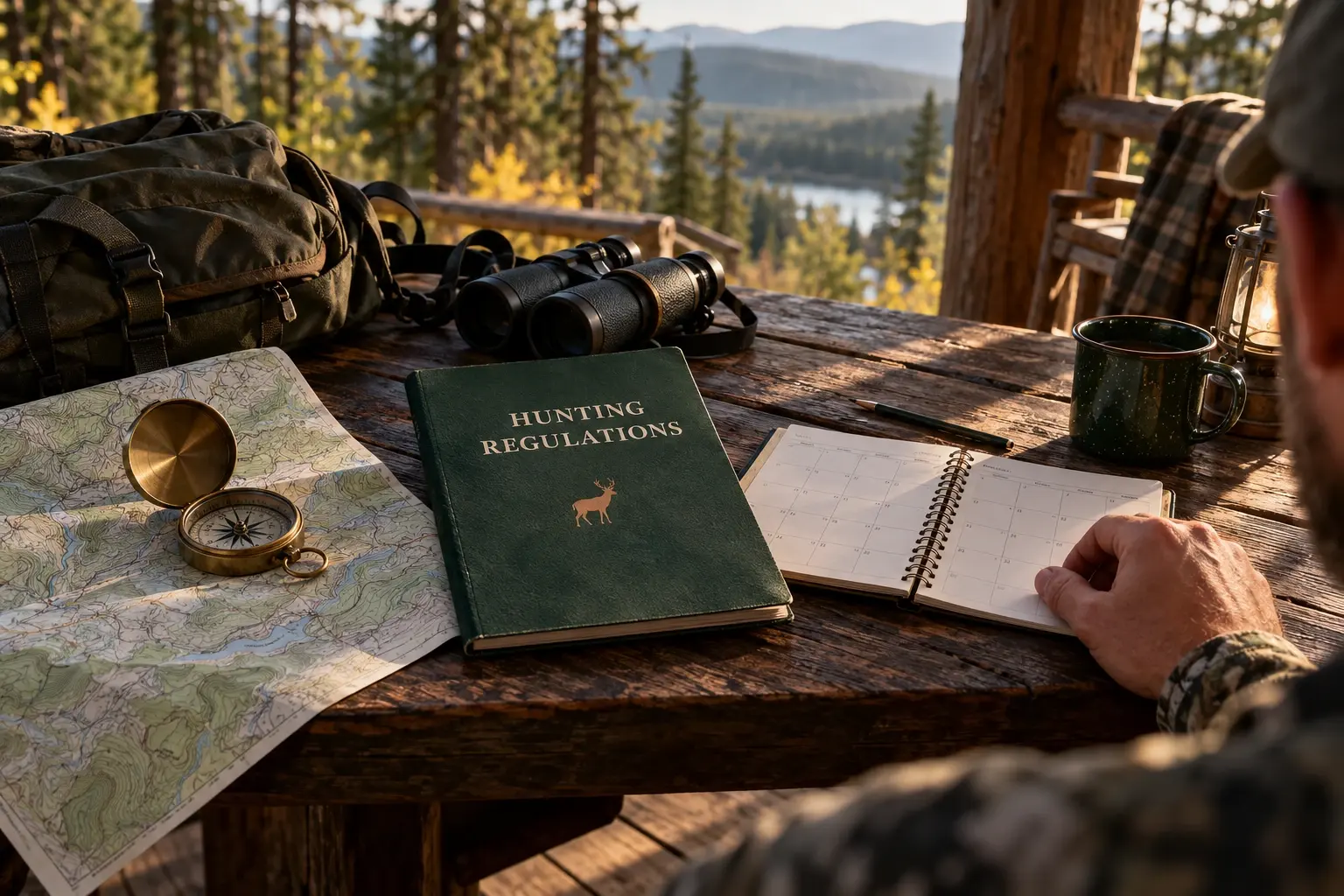
A practical hunting gear checklist by category: clothing layers, blaze orange, optics, weapon and ammo, safety, field dressing, navigation and first aid.
A good hunting gear checklist covers seven core categories: clothing and blaze orange, optics, your weapon and ammunition, safety gear, a field dressing kit, navigation, and first aid, all carried in a pack that fits the hunt. Build a base kit you use every time, then add species-specific gear on top.
The lists below are written for a typical day hunt on foot. Scale up for overnight or backcountry trips and trim down for a short sit near the truck. Rules on blaze orange, legal weapons and ammunition differ by state, so confirm the requirements for your hunt on our state hunting regulations page.
Clothing layers and blaze orange
Staying warm, dry and quiet keeps you in the field longer. Dress in layers you can add or remove as you walk in, sweat, then sit still in the cold.
- Base layer: moisture-wicking top and bottom in synthetic or merino wool. Avoid cotton next to the skin.
- Mid layer: fleece or wool for insulation.
- Insulated layer: a puffy jacket or vest for long sits in cold weather.
- Outer layer: a quiet, wind-resistant or waterproof jacket and pants.
- Boots: broken in, waterproof if the ground is wet, insulated for cold sits. Bring spare socks.
- Hat, warm cap or balaclava, and gloves (a thin pair for shooting and a warm pair for sitting).
- Rain gear that packs small.
- Blaze orange hat and vest, coat or other garment where required or recommended.
Many states require a set amount of blaze orange during firearm seasons, and some require it for other seasons too. Even where it is not required, hunter orange makes you far easier for other hunters to see. Wear it when moving through the woods during gun season, and check your state's exact rule on how much and where on the body.
Optics and calls
- Binoculars with a harness so they stay ready and protected
- Rangefinder, especially for archery and longer shots
- Spotting scope and tripod for open country and western hunts
- Riflescope or sights checked and zeroed before the season
- Lens cloth and lens covers
- Calls that fit the species: grunt tube and rattle bag for deer, box and mouth calls for turkey, duck and goose calls for waterfowl
Weapon, ammunition and accessories
Bring the weapon you have practiced with, and confirm it is legal for the species, season and area you are hunting.
- Rifle, shotgun, muzzleloader, bow or crossbow
- Ammunition or arrows and broadheads matched to your weapon and legal for the game. Waterfowl hunting requires approved nontoxic shot, and some areas require nontoxic shot for other game.
- Sling for a rifle or shotgun
- Bow release, spare release, arrow quiver and broadhead wrench
- Shooting sticks or a bipod
- Locked hard case for travel and a soft case for the field
- Cleaning kit and a bore light
- Hearing and eye protection for range practice
Treat every firearm as if it were loaded, keep the muzzle pointed in a safe direction, and keep your finger off the trigger until you are ready to shoot. Never load a firearm until you are at your hunting spot and never climb with a loaded firearm.
Safety gear and tree stand essentials
- Full-body safety harness for any stand off the ground, plus a lifeline or climbing system that keeps you connected from the ground up
- Haul rope to raise and lower an unloaded firearm or bow
- Suspension relief strap attached to your harness
- Headlamp with spare batteries, plus a small backup light
- Fully charged phone in a pocket you can reach, plus a small power bank
- Whistle or signal device
- Fire starter, lighter and tinder
- Emergency blanket or bivy
- Water and a way to treat more on longer hunts
- Snacks or a meal
Our tree stand safety guide explains how to use a harness and lifeline correctly. Before every hunt, leave a written plan with someone at home that says where you are going and when you expect to be back.
Field dressing kit and game care
Pack this kit for any hunt where you plan to take an animal. A clean, organized kit makes the job faster and helps protect the meat.
- Sharp fixed-blade or replaceable-blade knife, plus a backup blade
- Small sharpener
- Disposable or reusable gloves (shoulder-length gloves help with big game)
- Game bags for quarters or deboned meat
- Paper towels or rags and a bottle of water
- Zip ties and a pen for tags, or your phone for electronic tagging
- Drag rope or harness for deer, frame pack for elk and other big animals
- Small bone saw if you plan to split the pelvis or remove antlers
- Contractor bags for heart and liver and to keep gear clean
- Coolers and ice back at the vehicle
See our step-by-step guide on how to field dress a deer for how to use these tools.
Navigation and first aid essentials
Navigation and communication
Getting lost wastes hunting time and can turn dangerous fast. Carry more than one way to find your way.
- Phone with a mapping app and offline maps downloaded for the area
- Handheld GPS or satellite communicator for remote country
- Paper map of the area and a compass you know how to use
- Property boundary map and written landowner permission where needed
- Flagging tape or reflective tacks for marking trails (remove them when you are done if required)
First aid kit for hunters
A compact kit should handle the common problems: cuts from knives and broadheads, blisters, sprains and minor burns.
- Adhesive bandages in several sizes and gauze pads
- Pressure bandage and a tourniquet you have trained with
- Medical tape and blister care
- Antiseptic wipes and antibiotic ointment
- Pain relievers and any personal medications
- Tweezers and small scissors
- Elastic wrap for sprains
- Nitrile gloves
Take a basic first aid course if you can. Knowing how to stop bleeding matters more than how much gear you carry.
Species and trip specific additions
Add these to the core kit based on what you are hunting:
- Deer: scent control products, a stand or ground blind, a seat cushion and attractants or decoys where legal.
- Turkey: box, slate and mouth calls, decoys, a lightweight seat, a face mask and gloves for concealment.
- Waterfowl: waders, decoys, a blind bag, approved nontoxic shot, a layout or boat blind and a dog vest if you hunt with a retriever. Carry your federal duck stamp if you are 16 or older.
- Upland birds: a strap vest, shooting glasses, a dog first aid kit, water for the dog and blaze orange.
- Elk and western hunts: a frame pack, trekking poles, a water filter, extra game bags and layers for big temperature swings.
For hunts away from home, add your license documents, travel cases and a plan for meat. Our out of state hunting trip checklist covers those details, and the Where2Hunt trip planner helps keep everything organized.
Frequently asked questions
What should a beginner bring hunting?
Start with weather-appropriate layers, blaze orange where required, your licensed weapon and legal ammunition, a knife and gloves for field dressing, a headlamp, a charged phone, water and a small first aid kit. Add binoculars when you can. You can build out the rest of your kit as you learn what your hunts actually require.
How much blaze orange do I need to wear?
It depends on the state and the season. Many states set a minimum amount for firearm deer seasons, often including a hat or a garment covering the upper body. Check your state's current regulations, and consider wearing it even when it is not required.
What goes in a hunting backpack?
A typical day pack holds extra layers, a headlamp, water and food, a knife and field dressing kit, game bags or a drag rope, a first aid kit, a map or GPS, and a fire starter. Add calls, a rangefinder and species-specific gear on top of that base.
Do I need a safety harness for a ladder stand?
Yes, wear a full-body harness in any stand off the ground, including ladder stands and box blinds on stilts where you could fall. Stay connected from the moment you leave the ground until you are back down, using a lifeline where possible.
General information, not legal advice. Hunting laws vary by state and change every year; confirm with the state wildlife agency. See an error? Tell us.