
How Many Acres Do You Need to Hunt Deer?
Where2Hunt staff · Updated Oct 29, 2026
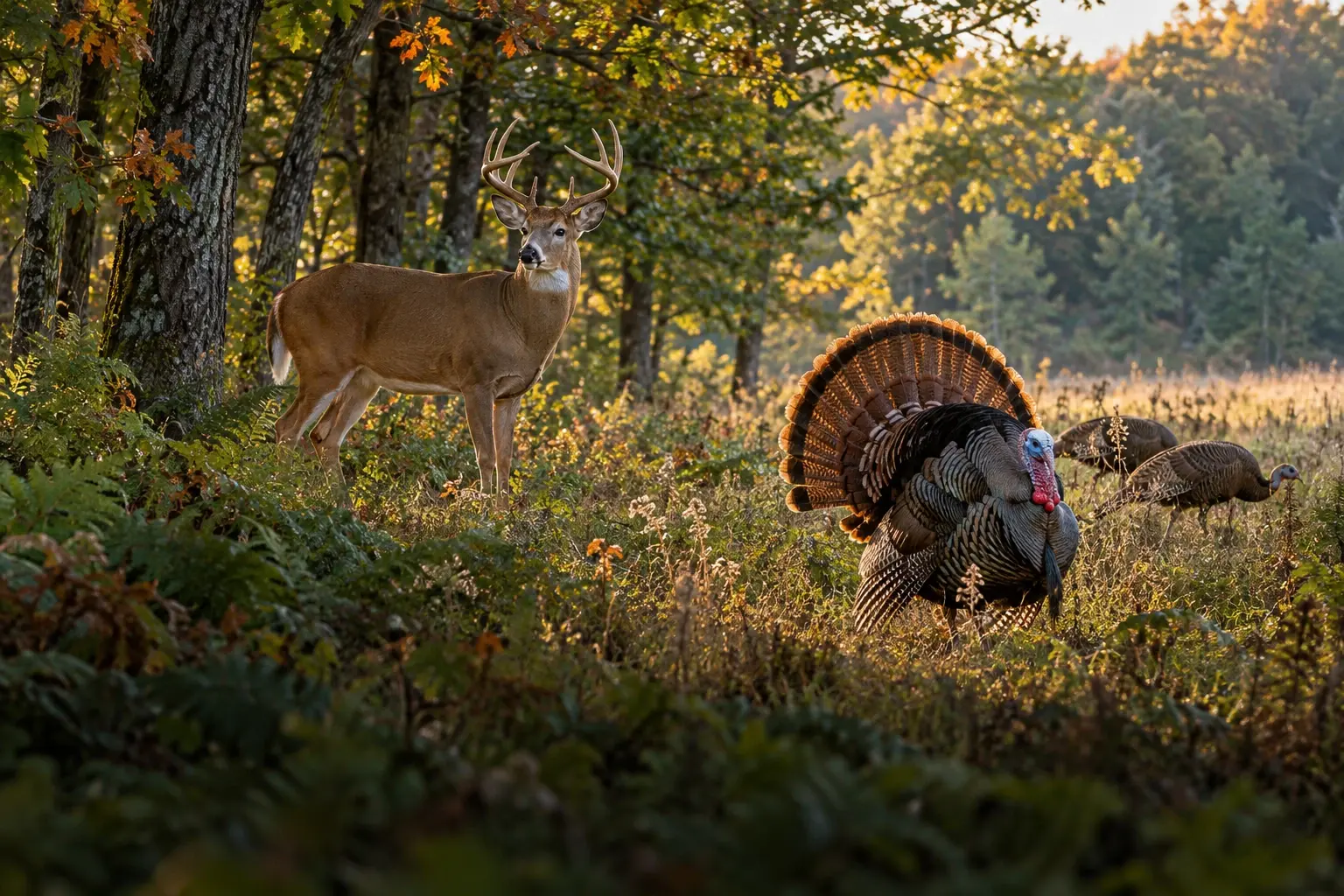
How many acres do you need to hunt deer? Habitat, shape, neighbors and pressure matter more than raw size. See what small tracts and big ones each do well.
There is no single number of acres you need to hunt deer. A well-placed small tract with good cover, food or a travel corridor can produce deer every season, while a large tract with poor habitat and heavy pressure may not. Habitat quality, shape, neighbors and how hard you hunt it matter more than raw acreage, though larger tracts give you more room for sanctuaries, food plots and management.
Why acreage alone does not answer the question
Whitetails do not read property lines. A deer's home range often covers more ground than a small or mid-sized tract, so on most properties you are hunting deer that also spend time on the neighbors' land. The real question is how much of their daily routine your property can capture, and how often they feel safe enough to move on it in daylight.
That depends on four things more than size.
Habitat quality
Deer need food, cover and water. A tract that offers thick bedding cover next to a food source will hold and attract more deer than a bigger tract of open, mature timber with little understory. Young forest, brushy edges, old fields and cutovers are often more valuable to deer than they look to people.
Shape
A square tract gives you more interior space away from boundaries than a long, narrow one of the same size. Narrow strips make it harder to hunt without your scent drifting onto the neighbors or deer seeing you come and go. On the other hand, a narrow tract that covers a ridge saddle, creek crossing or strip of cover between two fields can be a great funnel.
Neighbors
What surrounds your property shapes what happens on it. A small tract bordered by a large block of unhunted woods or a big farm that holds deer can be excellent. The same acreage surrounded by heavily hunted land, roads or houses may struggle. Before buying, look at aerial imagery of the whole area, not just the parcel.
Hunting pressure
Deer respond quickly to people. A tract that gets walked through every weekend, hunted from the same stand on every wind, or crossed by ATVs at all hours will push mature deer elsewhere or into nighttime movement. Light, careful pressure lets a small property hunt much bigger than it is.
What small hunting tracts can do well
Small acreage gets dismissed too quickly. Plenty of hunters fill tags every year on modest parcels by playing to their strengths.
- Catch deer in transit. If the tract sits between bedding and food, or along a funnel, you can hunt travel routes without needing to hold deer full time.
- Offer something the neighbors lack. A small food plot, a water source, or a patch of thick cover in a mostly open area can draw deer in.
- Stay low impact. With fewer stands and limited trips, you can keep pressure light and hunt only when the wind is right.
- Cost less to buy and maintain. Smaller tracts are easier to afford and quicker to work on, which leaves budget for habitat projects.
The key on small ground is discipline. Plan entry and exit routes that keep you out of sight and downwind, hunt each stand only on the right wind, and resist the urge to scout during season. Our post on where to put a deer stand covers wind and access in more detail.
When larger acreage helps
More land gives you more options, especially if you want to manage the property rather than just hunt it.
Room for a sanctuary
A sanctuary is a section of the property where nobody goes. Deer learn quickly where they are left alone, and a protected bedding area can keep them on your land through the season. On small tracts there may not be space to set aside a sanctuary and still have places to hunt.
Space for food and habitat work
Larger properties can support bigger or multiple food plots, timber stand improvement, native grass plantings and a road and trail network laid out around wind and access. These projects take time and money, but they compound over the years. Our guide on how to improve hunting land covers the main options.
More stand locations for different winds
With more ground, you can set stands for several wind directions and rotate them, which keeps any single area from getting overhunted.
Management decisions that matter
On a larger tract, decisions about which deer to harvest have more effect because more of the local herd lives on your land for more of the year. On small tracts, your choices are only part of the picture unless neighbors are on the same page.
Working with neighbors and cooperatives
One of the best ways to make a small tract hunt like a large one is to work with the people around you. Some landowners form informal agreements to share trail camera information, follow similar harvest goals, or coordinate habitat work. In some regions, groups of neighbors organize deer management cooperatives that pool knowledge and agree on general goals across many properties.
You do not need a formal group to benefit. Introduce yourself, be respectful of boundaries, return lost deer quickly and offer help with fence repairs or road work. Good relations often lead to permission to track wounded deer, shared information and fewer conflicts. Always follow your state's rules on tracking, retrieval and trespass, which you can check on our state hunting regulations and agencies pages.
How to judge a specific property before buying
When you look at a tract, think about how deer use it rather than just counting acres.
- Study aerial imagery of a wide area to see where cover, food and water sit in relation to the parcel.
- Walk the land and look for trails, rubs, scrapes, beds and droppings.
- Note where roads, houses and neighboring stands are.
- Picture your access routes and which winds each stand location would need.
- Ask the seller or listing agent about past harvests, trail camera photos and how the land has been hunted.
You can search hunting land for sale by size and location on Where2Hunt, then compare tracts with the factors above in mind. If whitetails are your main target, our whitetail deer hunting page has more on the species. Before you commit, work through our hunting land due diligence checklist.
Frequently asked questions
Can you deer hunt on 5 or 10 acres?
Yes, if local rules allow hunting there and the land has cover, food or a travel route deer use. Small tracts work best with light pressure, careful wind management and good access routes. Check local discharge and setback rules, which vary by state and municipality.
Is 40 acres enough for deer hunting?
It can be very good, depending on habitat, shape, neighbors and pressure. A well-located 40 can hold or regularly see deer, especially with thick cover, a food source and a low-impact hunting plan.
How many acres do you need for a deer sanctuary?
There is no fixed size. A sanctuary needs to be thick, quiet and left alone, and placed so you can hunt around it without disturbing it. On smaller tracts it may be a single patch of heavy cover.
Do more acres mean bigger deer?
Not by itself. Age, nutrition, genetics and hunting pressure all play roles, and deer roam across property lines. Larger tracts make management easier, but habitat and how the land is hunted usually matter more than size alone.
General information, not legal advice. Hunting laws vary by state and change every year; confirm with the state wildlife agency. See an error? Tell us.