How to Lease My Land for Hunting: A Landowner's Guide
Where2Hunt staff · Updated Oct 29, 2026
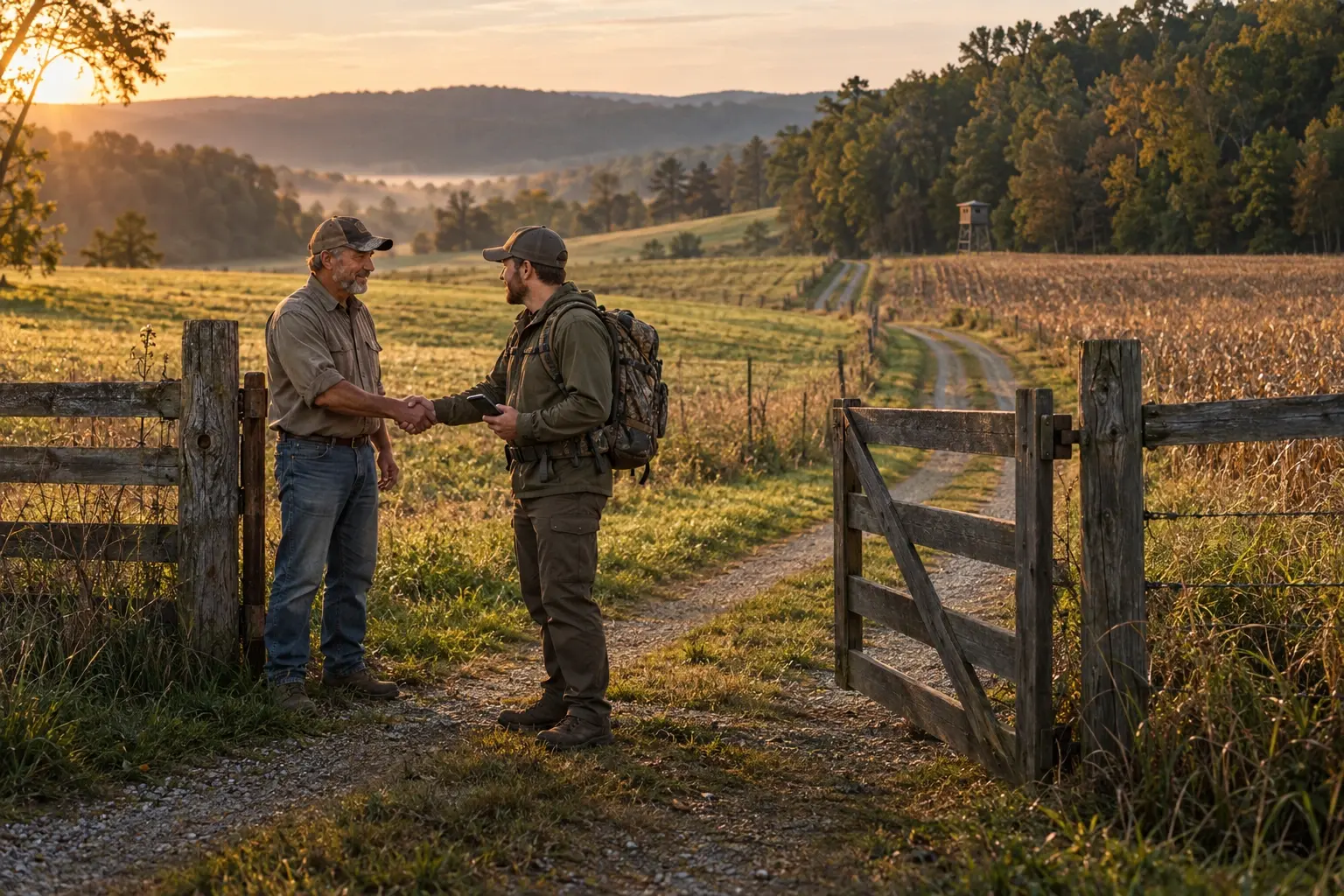
How to lease my land for hunting: choose annual, seasonal or day access, screen hunters, set clear terms, require insurance and put it all in writing.
To lease your land for hunting, decide what kind of access you want to offer (annual, seasonal or day), screen hunters carefully, set clear rules, require liability insurance, and put everything in a written lease reviewed by an attorney. Then manage the relationship like any other business arrangement: communicate often, walk the property together, and renew with people who treat your land well.
Decide what kind of hunting access to offer
Start with what you want out of the arrangement. Some landowners want steady income. Others mostly want someone they trust watching the property, posting boundaries and keeping trespassers out. Most want some of both.
There are three common ways to offer access:
- Annual lease. One hunter or group gets the hunting rights for a full year. They can scout, hang stands and often plant food plots. This is usually the simplest to manage and builds the longest relationships.
- Seasonal lease. Rights cover a single species or season, such as spring turkey, archery deer or waterfowl. This lets you offer different seasons to different groups, as long as the terms do not overlap.
- Day access. Hunters book specific dates. It can bring in more total use, but it takes more scheduling, more screening and more time on your part.
You can mix these. A landowner might keep one corner for family, lease the deer hunting to a small group, and offer a few spring turkey days to someone else. The day access vs hunting lease guide covers the tradeoffs from the hunter's side, which helps you think about what people will want.
Know your land before you set terms
Walk your property with a hunter's eye, or ask an experienced hunter you trust to walk it with you. Take note of:
- Which species use the property and where they feed, bed and travel.
- How hunters will get in and out, and which roads and gates they can use.
- Areas you want off limits: the house, barns, livestock, a family pond, sensitive timber or crop fields.
- Boundaries that need posting or marking.
- How much pressure the neighbors put on the same deer, turkeys or ducks.
Have a clear map made. You will attach it to the lease, and it prevents most boundary arguments before they start.
Then look at what similar properties near you are offered for. Lease rates depend on region, species, habitat quality, acreage, improvements like stands and plots, and local demand. Browsing current lease listings in your state gives you a feel for how comparable properties are described and priced.
How to screen hunters for your land
The hunters you choose matter more than the rate you charge. A careful, respectful group protects your land and your reputation with neighbors. A careless one can cost you far more than the lease brings in.
When someone asks about the lease, meet them in person and ask:
- How many people will hunt, and who are they?
- What do they want to hunt, and with what methods?
- How often do they plan to be on the property?
- Have they leased before, and can you call that landowner?
- Will they carry liability insurance and name you on it?
- Are they willing to follow your rules on vehicles, guests, stands and harvest?
Ask for references and actually call them. Check that each hunter has a valid license and has completed hunter education where the state requires it. Trust your gut. If someone pushes back on reasonable rules before they have even signed, that will not get better later.
Many landowners prefer a smaller group they know well over a larger group paying a bit more. Fewer people usually means less wear on roads, less pressure on game and fewer surprises.
Set clear terms for your hunting lease
Write down what you expect so there is no room for guessing. The core terms include:
- The lease term and the dates or seasons it covers.
- The payment, when it is due, and any deposit.
- The maximum number of hunters and the guest policy.
- Allowed species and methods, and any harvest rules you want (antler restrictions, doe harvest, reporting what is taken).
- Where stands may go, whether screw-in steps are allowed, and who owns stands at the end.
- Whether food plots, feeders or mineral sites are allowed, keeping in mind that baiting and feeding rules vary by state.
- Which roads may be driven, ATV rules, and wet weather limits.
- Safety rules beyond state law, such as full-body harnesses in tree stands or no shooting toward buildings.
- How and when you can end the lease early, and what happens if you sell the land.
Our hunting lease agreement checklist walks through each of these in more detail.
Insurance, liability and the written lease
This is the part most landowners worry about, and it deserves professional help.
- Require liability insurance. Ask the lessee to carry hunting lease liability insurance with you named as an additional insured, and get proof before the lease starts.
- Call your own agent. Your farm or homeowners policy may or may not cover a paid hunting lease. Find out before you sign anything.
- Talk to an attorney. Many states have recreational use laws that limit landowner liability, but charging a fee can change how those protections apply. An attorney licensed in your state can draft or review the lease, the indemnity language and any releases.
- Talk to a tax professional. Lease income is generally reportable, and it can interact with farm, forest or other land use tax programs in some states.
Keep the signed lease, the map, proof of insurance and every hunter's contact information in one place.
Manage the relationship with your hunters
A good lease is a relationship, not just a check once a year. A few habits keep it working:
- Walk the property with your hunters before the season and show them the boundaries in person.
- Tell them about farm work, logging or family visits that will affect their hunting.
- Ask them to report trespassers, damaged fence, washed out roads and anything unusual.
- Ask for a short harvest report after each season, along with trail camera photos if they are willing to share.
- Address problems early and directly, before they turn into a reason to end the lease.
Good hunters notice things on the property that you miss, and over time they often become one of the best assets your land has.
How to list your hunting land for lease on Where2Hunt
Once your terms are set, put the property where hunters are looking. Where2Hunt organizes hunting leases and day access by state and species so hunters can compare options near them. If you run hunting access as a business, such as a lease operation, preserve or outfitter, the provider page explains how to claim a listing and keep your information current.
If you decide to sell rather than lease, land on Where2Hunt is listed through a MyStateMLS agent. The guide on how to list hunting land explains how that works.
Frequently asked questions
How much should I charge to lease my land for hunting?
There is no single rate. Lease prices depend on your region, the species, habitat quality, acreage, improvements and local demand. Look at comparable lease listings near you and talk with local land agents or extension offices to find a fair range.
Do I need insurance to lease my land for hunting?
It is strongly recommended. Most landowners require the hunters to carry hunting lease liability insurance that names the landowner as an additional insured, and they also check their own policy with their agent. An attorney can explain how your state's liability laws apply to a paid lease.
Should I lease to one group or offer day hunts?
An annual lease to one small group is simpler to manage and usually puts less pressure on the land. Day hunts can bring more total use but take more scheduling and screening. Some landowners combine the two by season or by part of the property.
Can I end a hunting lease early?
Only according to what the lease says and your state's law. Write clear termination terms into the lease, including the reasons for ending it, the notice required, and whether any payment is refunded.
General information, not legal advice. Hunting laws vary by state and change every year; confirm with the state wildlife agency. See an error? Tell us.