How to Find a Hunting Lease: Where to Look and What to Ask
Where2Hunt staff · Updated Oct 29, 2026
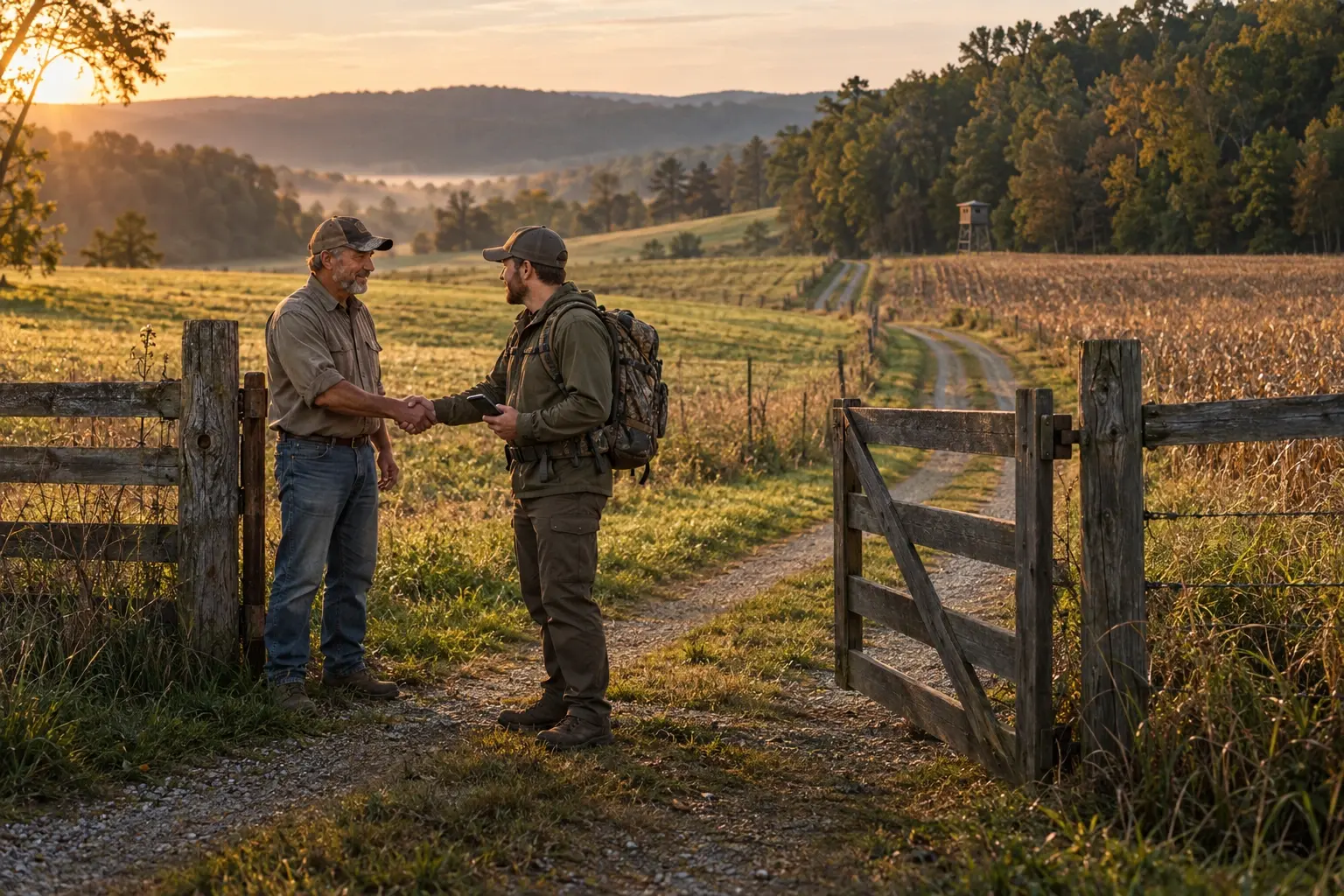
How to find a hunting lease: ask landowners directly, contact timber companies, use plat maps and lease listings, and spot red flags before you sign.
To find a hunting lease, work several channels at the same time: ask landowners directly, contact timber companies and other large landowners, use county plat maps to learn who owns the ground you want, and check lease listings and local hunting clubs. Expect to make a lot of contacts before one turns into a deal, and get every agreement in writing before you pay.
Decide what kind of hunting lease you are looking for
Before you start knocking on doors, get clear on what you actually need. A landowner will take you more seriously if you can explain it in a sentence or two.
- Term. An annual lease gives you the property year round for scouting, stands and food plots. A seasonal lease covers one species or one season. Day access lets you hunt a specific date without a long commitment.
- Group size. Are you leasing alone, with a partner, or for a club of several members? Landowners often care more about how many people will be on the property than about anything else.
- Species and methods. Deer, turkey, waterfowl, upland birds and hogs all call for different ground. Archery only, firearms, or both matters too.
- Distance. A great lease four hours away may get hunted less than an average one thirty minutes from home. Be honest about how often you will go.
- Budget. Lease rates vary widely by region, species, habitat and demand. Look at what similar properties near you are asking before you make an offer.
If you are not sure whether you want a full lease or something lighter, our guide to day access vs a hunting lease walks through the tradeoffs.
Ask landowners directly and respectfully
Plenty of good hunting ground never gets advertised. The owner has simply never been asked by the right person. Asking in person still works, but how you ask makes the difference.
Pick your timing. Avoid busy times like planting, harvest, early mornings on a working farm, and dinner hour. Never show up during hunting season dressed in camo with a rifle in the truck. Go in the off season, in clean everyday clothes, and keep it short.
Introduce yourself, say where you live, and explain what you are hoping for. If the answer is no, thank them and leave. A polite no today can turn into a yes in two years when the current lessee moves on.
Bring something that makes it easy to say yes:
- A short written introduction with your name, phone number, the people who would hunt with you, and what you want to hunt.
- Proof that you have completed hunter education.
- A willingness to carry hunting lease liability insurance and name the landowner on it.
- References from other landowners or people in the community.
- An offer to help: posting boundary signs, reporting trespassers, picking up trash, fixing fence, or sharing trail camera photos.
Follow up with a handwritten note or a short message thanking them for their time, even if they turned you down.
Contact timber companies and large landowners
Timber companies, land investment groups and other large landowners often lease hunting rights across big blocks of ground. Some run their own lease programs. Others hire a land management or recreation company to handle leases, and some fill openings by application, lottery or bid.
These leases tend to be businesslike. Expect a standard written agreement, insurance requirements, rules about vehicles and stands, and limits on when you can be there during logging. In exchange, you often get large acreage and a clear process.
To find them, look at who owns the big tracts in your target area, then search for that company's recreational lease program or call their regional office. State forestry agencies and county extension offices sometimes know which companies lease in the area.
Hunting clubs are another route. Many clubs lease large properties and add members when someone leaves. Ask about the bylaws, how many members there are, how stands are assigned, guest rules, and how the club handles disputes before you join.
Use county records and plat maps to find landowners
When you see a property that looks good, the next step is learning who owns it. County records make that possible.
- County assessor or tax records. Most counties publish parcel ownership and mailing addresses, often through an online GIS parcel viewer.
- Plat books. Many rural counties sell printed or digital plat books showing parcel lines and owner names.
- Mapping apps. Several hunting map apps include parcel boundary and ownership layers, which help you study a whole area before you make calls.
Look for tracts that border public land, hold creek bottoms or timber in mostly open country, or sit next to properties you already know hold game. Then write a short, polite letter to the owner's mailing address. A letter is less intrusive than an unannounced visit, gives the owner time to think, and shows you went to some effort.
Check lease listings, directories and word of mouth
Online listings and directories put available ground in front of you without the cold calls. On Where2Hunt you can browse hunting leases and day access by state and species, and compare what is offered on nearby properties.
Do not overlook local sources:
- Feed stores, farm supply stores and co-ops
- Deer processors and taxidermists
- Rural land agents who know which owners are open to hunting
- Local hunting clubs and conservation group chapters
- Friends, coworkers and family with rural connections
If the lease you need does not exist, buying may be worth a look. Browsing hunting land for sale in your area also tells you which tracts are changing hands, and new owners sometimes want a trusted hunter on the property.
What to look for before you sign a hunting lease
Never lease a property you have not walked. Visit before you commit, ideally with the landowner or their manager.
- Boundaries. Ask for a map and walk the lines. Make sure the boundaries are marked or can be marked.
- Legal access. Confirm how you get in, which gates and roads you can use, and whether access crosses a neighbor's land.
- Who else hunts it. Ask whether family members, farm workers, or other lessees will be on the property.
- Pressure next door. Heavy hunting on neighboring land affects what you will see.
- Habitat and sign. Look for food, cover, water, trails, rubs, scrapes, roost sites or whatever fits your species.
- Existing stands and blinds. Find out who owns them and whether they stay.
Once you agree on terms, put it in a written lease. Our hunting lease agreement checklist covers what the document should include, and an attorney can review it for you.
Red flags when looking for a hunting lease
Lease scams and bad deals do happen, especially with online ads. Slow down if you see any of these:
- The person wants full payment by wire, cash app or gift card before you see the land.
- They cannot show they own or control the property. Check the county records yourself.
- They refuse to sign a written lease.
- Boundaries are vague, or they cannot show you a map.
- The number of hunters is unclear or keeps growing.
- You feel pressure to decide on the spot because "someone else is interested."
- The listing photos show up on other ads under a different name.
Also check the state regulations for the area you plan to hunt. Licenses, tags, and methods vary by state, and you can find each state's wildlife agency through our state hunting regulations and agencies pages.
Frequently asked questions
When is the best time to look for a hunting lease?
The off season is usually best. Many leases turn over after hunting season ends, and landowners have more time to talk in late winter, spring and summer than in the fall. Starting early also leaves time to scout before you commit.
How do I ask a landowner for permission to hunt?
Visit at a convenient time in the off season, introduce yourself briefly, and explain exactly what you want to hunt and who would be with you. Offer references, proof of hunter education and insurance, and help with chores like posting signs. Accept a no politely and leave your contact information.
Do I need insurance to lease hunting land?
Many landowners and timber company lease programs require the lessee to carry hunting lease liability insurance that names the landowner as an additional insured. Even when it is not required, it protects both sides. Talk to an insurance agent about coverage that fits your lease.
Is a hunting club lease a good way to start?
It can be. Joining an established club often gives you access to more acreage than you could lease alone, at a shared cost. Read the bylaws carefully and meet the members first, because the rules and the people matter as much as the land.
General information, not legal advice. Hunting laws vary by state and change every year; confirm with the state wildlife agency. See an error? Tell us.